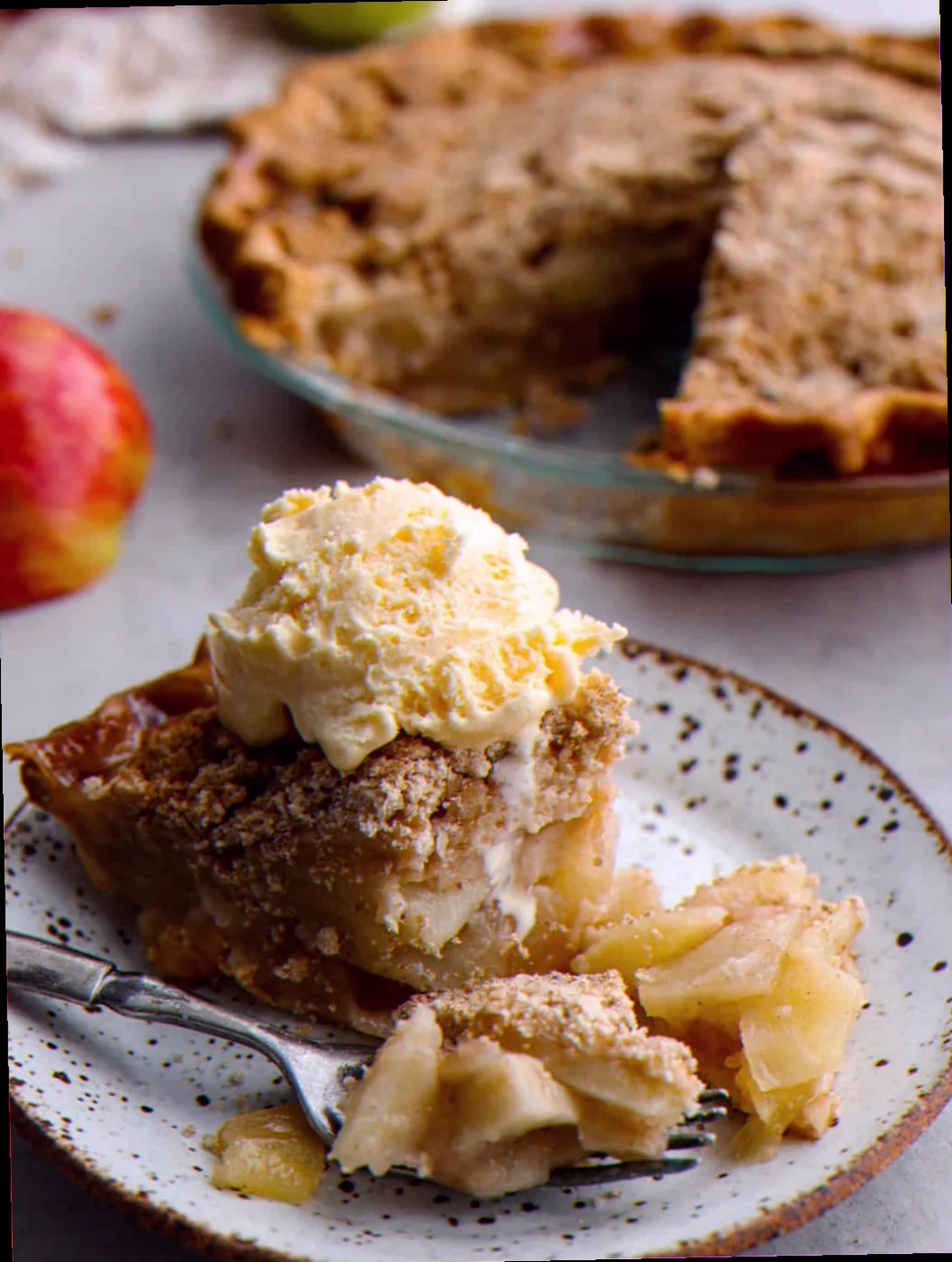
The most common failure in apple cinnamon pie is the Soggy Bottom Syphon, a disaster where the bottom crust dissolves into a grey, gummy paste while the filling transforms into a thin, brown-sugar soup. This occurs when excess moisture from the apples is released too quickly without being bound by a stabilizer, effectively boiling the pastry from the inside out. This diagnostic guide identifies every failure point from the selection of the fruit to the final cooling phase to ensure your pie achieves structural integrity and deep caramelization.
What Perfect Apple Cinnamon Brown Sugar Pie Actually Looks, Feels, and Tastes Like
Before diagnosing a failure, you must recognize the benchmark of success. A perfect pie is a feat of engineering where the crust and filling exist in a symbiotic, yet distinct, relationship.
| Stage | Success marker — what you should see / feel / smell / hear |
|---|---|
| Raw Dough | A marbled appearance with visible, pea-sized chunks of butter; it should feel cold (10–15°C) and slightly shaggy, not sticky or uniform. |
| Mid-Baking | Filling juices must be audibly bubbling through the vents; the aroma is dominated by toasted butter and warm cinnamon, not burning sugar. |
| At the Finish | The crust is deep golden-brown (G-B-T) and sounds hollow when tapped; internal temperature of the filling reaches 90°C (195°F) to activate thickeners. |
| When Serving | A clean slice that holds its triangular shape on the plate; the filling is glossy and clings to the fruit; the bottom crust is crisp enough to shatter under a fork. |
The Ingredient Failures — Wrong Choices Before You Even Start Cooking
Many pies fail in the grocery aisle. Using the wrong “biological” components creates chemical imbalances that no amount of technique can fix.
- The Mushy Apple Collapse: caused by using soft, high-moisture varieties like McIntosh or Red Delicious → fix: Use high-acid, high-pectin firm apples like Granny Smith or Honeycrisp which maintain cellular structure at high heat.
- The Greasy Puddle: caused by using low-fat “tub” margarine or high-moisture cheap butter → fix: Use European-style butter with at least 82% butterfat to ensure a lower water content and higher flake potential.
- The Gritty Filling: caused by using coarse, dry brown sugar that hasn’t been stored properly → fix: Use fresh “soft” dark brown sugar; the added molasses provides the acidity needed to interact with the cinnamon and balance the sweetness.
- The Tough-Hide Crust: caused by using high-protein bread flour → fix: Use All-Purpose flour (10–11% protein) or a 50/50 mix of AP and Pastry flour to limit gluten development.
The Technique Failures — What Goes Wrong During Cooking
Execution errors usually involve temperature mismanagement or structural neglect.
- The Shrinking Side-Wall: The crust slides down the sides of the dish → caused by “Gluten Memory” from over-working the dough or failing to let it rest → fix: Chill the dough for at least 60 minutes after mixing and 30 minutes after shaping to allow gluten strands to relax and fats to re-solidify.
- The “Crunch-Gap” Void: A massive air pocket between the top crust and the apples → caused by the apples shrinking as they bake while the crust domes and sets → fix: Macerate apples in sugar/cinnamon for 30 minutes before baking to “pre-shrink” them, or slice them into thin 3mm segments to ensure they settle densely.
- The Cinnamon Seize: Filling tastes bitter or looks dusty/clumped → caused by adding cinnamon directly to wet apples without a carrier → fix: Whisk cinnamon and salt into the brown sugar/flour/cornstarch mixture before tossing with the fruit to ensure even distribution.
- The Steam-Bomb Explosion: The top crust cracks or the sides blow out → caused by insufficient venting → fix: Cut at least five 2-inch slits in the top crust or use a decorative lattice to allow steam to escape at 100°C.
The Equipment Failures — When Your Tools Are the Problem
The vessel is as important as the ingredients. The wrong material can act as an insulator when you need a conductor.
- The Pale Bottom: caused by using ceramic or stoneware dishes which heat up too slowly → fix: Use a tempered glass (Pyrex) or dull metal pan. Glass allows you to visually inspect the bottom crust for browning; metal conducts heat rapidly to sear the pastry.
- The Carbonized Rim: caused by thin edges exposed to the oven’s heating element → fix: Use a pie shield or aluminum foil ring for the first 30 minutes of baking to protect the edges while the center cooks.
- The Wet-Work Surface: caused by a warm wooden or plastic countertop melting the butter in the dough → fix: Work on a chilled marble slab or stainless steel surface; if unavailable, place a baking sheet in the freezer for 10 minutes, then flip it over and roll your dough on its cold surface.
The Full Recipe — Built Around Preventing Every Failure Above
This recipe is a sequence of failure-prevention steps.
- All-purpose flour — 315g — Prevents gluten toughness; provides structure.
- Unsalted butter (82% fat) — 225g — Must be cubed and chilled to 4°C to prevent “The Mealy Crust.”
- Ice water — 60–80ml — Cold temperature prevents the butter from melting prematurely.
- Granny Smith Apples — 1.2kg (approx 6-7 large) — Prevents “The Mushy Apple Collapse.”
- Dark Brown Sugar — 150g — Provides moisture and deep caramel flavor.
- Cornstarch (Maize starch) — 25g — Prevents “The Soup Filling” by binding fruit juices.
- Cinnamon (Ceylon or Saigon) — 2 tsp — Provides the aromatic profile.
- Lemon juice — 1 tbsp — Acidity prevents apple oxidation (browning) and balances sugar.
Method:
- The Fat Integration: Pulse flour and chilled butter cubes in a processor until butter is the size of peas. Failure prevented: Over-mixing. Success marker: You should see distinct yellow flecks of butter in the white flour.
- The Hydration: Add ice water 1 tablespoon at a time until the dough just holds when squeezed. Failure prevented: The Tough-Hide Crust. Success marker: Shaggy, not sticky.
- The Rest Phase: Wrap in plastic and chill for 1 hour. Failure prevented: The Shrinking Side-Wall. Success marker: Dough feels firm and cold.
- The Apple Prep: Peel and slice apples to 3mm thickness. Toss with brown sugar, cinnamon, lemon, and cornstarch. Let sit for 20 minutes. Failure prevented: The Crunch-Gap. Success marker: A pool of syrupy liquid forms at the bottom of the bowl.
- The Assembly: Roll out bottom crust to 3mm thickness. Pour in apples, but leave the excess liquid in the bowl. Failure prevented: The Soggy Bottom. Success marker: Apples are tightly packed.
- The Seal: Drape top crust, crimp edges, and cut large vents. Failure prevented: The Steam-Bomb. Success marker: Clear paths for steam.
- The Bake: Start at 200°C (400°F) for 20 mins, then drop to 175°C (350°F) for 40 mins. Failure prevented: Underbaked filling thickeners. Success marker: Juices must bubble like lava through the vents.
How to Rescue Apple Cinnamon Pie When It Has Already Gone Wrong
- If the crust is browning too fast but the apples are hard: Cover the entire pie loosely with foil and move it to the lowest rack. This protects the pastry while the bottom-up heat continues to soften the fruit. (Partial recovery: Crust may be slightly less crisp).
- If you cut the pie and the filling runs out like water: Stop cutting immediately. The thickeners (cornstarch) only set fully as the pie cools to room temperature (approx. 21°C). Place the pie back in a 150°C oven for 15 minutes to re-activate the starch, then let it cool for a full 4 hours.
- If the bottom crust is definitely raw but the top is perfect: This is a “Cold-Base Failure.” Slide the pie out of its dish (if using metal) onto a preheated baking stone or steel for 10 minutes. If in glass, place it directly on the floor of the oven for 5 minutes.
Make-Ahead: Which Failures This Introduces and How to Avoid Them
- The Oxidation Gray-Out: Making the filling too far ahead causes apples to turn a muddy gray. Fix: Do not macerate for more than 2 hours unless refrigerated.
- The Reheat-Sog: Reheating a cold pie in the microwave ruins the pastry. Fix: Reheat in a 150°C (300°F) oven for 15–20 minutes. This re-crisps the butter in the crust while gently warming the interior.
- Freezing Failure: Freezing an unbaked pie often leads to a soggy bottom during the long thaw. Fix: Bake the pie fully, cool completely, then freeze. Reheat from frozen at 175°C for 30 minutes.
Related topics: Recipe apple pie crust · Yummy apple pie recipe · Soft best apple pie filling recipe
Diagnostic FAQ
My pie turned out with a “hollow” top crust — what went wrong?
This is the Crunch-Gap. You didn’t macerate your apples or slice them thin enough. The apples settled during baking, but your crust “set” early. Next time, pile the apples higher in the center and ensure they are softened with sugar before they go into the dough.
It looked right but tasted like “dusty” cinnamon — where did I go wrong?
You likely used old, pre-ground cinnamon or didn’t mix it with the sugar first. Cinnamon is hydrophobic; it needs to be coated in sugar or fat to integrate into a sauce.
Everything looked perfect until I sliced it, then the bottom was a sponge — why?
The Juice Overload. You likely poured all the macerated liquid from the apple bowl into the pie. That liquid is delicious, but it’s too much for the starch to handle. Next time, discard half the liquid or simmer it on the stove into a syrup before pouring it back over the apples.