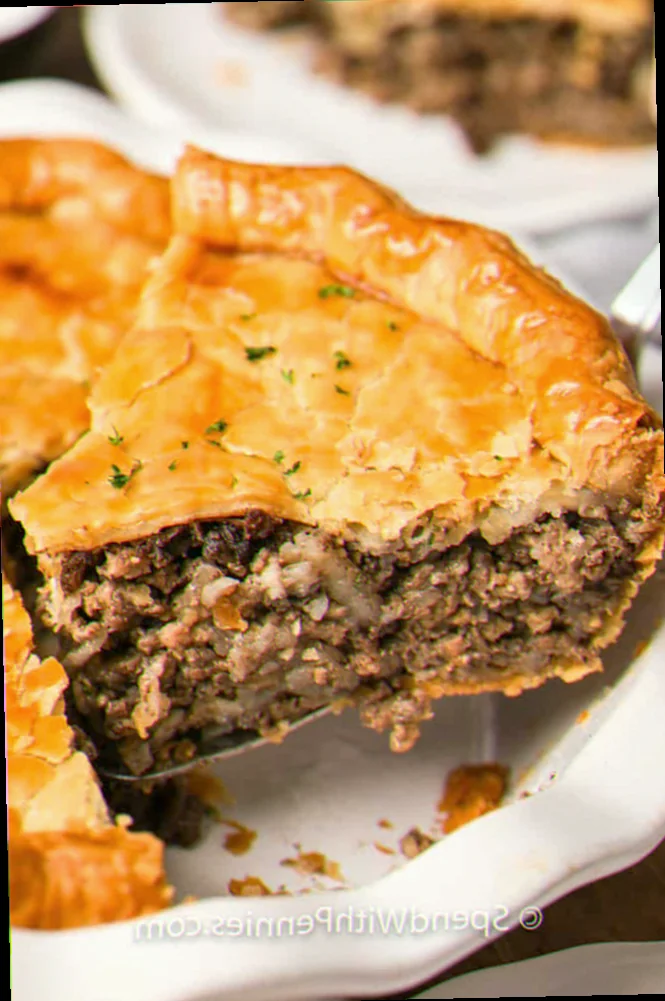
I spent three years producing beef pies with “armor-plated” lids and soggy, translucent bottoms before I realized that the secret wasn’t in the filling at all, but in a technique I’ve come to call the Lamination Fold. I used to think a crust was just a delivery vehicle for gravy, a structural necessity that you tolerated rather than celebrated. My early attempts were either so tough they required a steak knife to pierce or so crumbly they disintegrated into a greasy sludge the moment they touched the braising liquid. It wasn’t until I stopped treating my pastry like a cookie dough and started treating it like a rough-puff hybrid that I finally achieved that shatteringly crisp, deep-golden crown that makes a beef pie legendary.
Why Most Versions of Beef Pie Crust Fail
The most common mistake—the one I made for a dozen Sunday dinners—is the “Food Processor Pulse” method. Most recipes tell you to pulse your fat and flour until they look like “fine breadcrumbs.” This is the “wrong way,” a shortcut that produces a shortcrust which is far too dense for a heavy beef filling. When you pulverize the fat into microscopic beads, you lose the pockets of air that create flakes. The result is a mealy, sandy texture that lacks the structural integrity to hold up against 500ml of rich ale gravy. You end up with a “Cardboard Shield”—a crust that is hard rather than crisp, and which absorbs moisture like a sponge, turning the bottom of your pie into a layer of raw, grey paste. A true beef pie crust needs to be “long”—it needs visible streaks of fat that expand in the oven to create distinct, savory layers.
The Ingredients That Actually Matter
I’ve learned that you cannot compromise on the fat-to-flour ratio if you want a crust that tastes as beefy as the filling. I start with 400g of plain all-purpose flour, which provides just enough protein to hold the structure without becoming bready. I’ve tried bread flour, but it turns the crust into a literal loaf of bread, which is a disaster. To that, I add 5g of fine sea salt—never table salt, which has a metallic aftertaste that ruins the richness of the beef.
The real magic, however, lies in the fat split. I use 150g of high-quality, unsalted European-style butter (which has a lower water content) and 100g of chilled beef suet. I spent a year trying to make all-butter crusts, but they lacked the “savory backbone” required for a meat pie. The suet has a higher melting point, which means it stays intact longer in the oven, creating massive air pockets. For the liquid, I’ve found that exactly 120ml of ice-cold water is the sweet spot, but only if it’s spiked with 10ml of apple cider vinegar. The acid in the vinegar inhibits gluten formation, ensuring that even if you accidentally overwork the dough a little, it remains tender rather than rubbery.
The Moment Everything Changes: The Lamination Fold
The revelation that changed my life was the Lamination Fold. I used to just ball the dough up and throw it in the fridge. Now, I treat it like a simplified puff pastry. The science is simple: by folding the dough over itself several times, you are creating alternating layers of cold fat and flour. When that cold fat hits a 200°C oven, the water in the butter evaporates instantly, pushing the layers of flour apart. Without this fold, you are just baking a solid block of seasoned flour. With it, you are building a skyscraper of flakes. The difference is the sound the fork makes—instead of a dull thud, you get a crisp shatter. This technique transformed my pies from “home-cooked effort” to “professional bakery standard” overnight.
How I Actually Make It Now — Step by Step
The Rough Shingle: I dump my 400g of flour and 5g of salt into a wide bowl and toss in the 150g of butter, which I’ve cut into cubes the size of sugar lumps. Instead of rubbing them into “breadcrumbs,” I use my thumb and forefingers to flatten each cube into a “shingle.” I want big, flat sheets of butter, not tiny grains. Then I stir in the 100g of suet, keeping everything as cold as humanly possible. If the butter starts to feel greasy, I put the whole bowl in the freezer for ten minutes.
The Acidic Bind: I mix my 120ml of ice water with the 10ml of vinegar and drizzle it over the flour. I use a butter knife to toss it together—never my hands, which are too warm. I’m looking for a “shaggy mass.” It should look like it’s failing to come together. If you add too much water here, the crust will shrink in the oven like a cheap wool sweater. I stop the moment there’s no dry flour left at the bottom of the bowl.
The Letter Fold: This is the critical moment. I tip the shaggy mess onto a floured surface and pat it into a rough rectangle. I fold the top third down and the bottom third up, like a business letter. I rotate it 90 degrees, roll it out gently, and do it again. I do this three times total. You’ll see streaks of butter and suet running through the dough like marble. This is exactly what you want. If the dough starts to resist or spring back, stop immediately—you’ve woken up the gluten, and it needs to go back to sleep.
The Long Sleep: I wrap the dough tightly and chill it for at least two hours, though overnight is better. This allows the flour to fully hydrate and the fats to re-solidify. If you rush this and try to bake a “warm” crust, the fat will just leak out of the pastry and pool at the bottom of your oven, leaving you with a dry, tough husk.
The High-Heat Blast: When it’s time to bake, I roll the dough to about 5mm thick. I always brush the top with a beaten egg yolk mixed with a splash of heavy cream for that deep mahogany shine. I bake at 200°C for the first 20 minutes to trigger that steam-powered lift from the Lamination Fold, then drop the temp to 180°C to finish cooking the interior. I’m looking for a crust that sounds hollow when tapped.
The Failures I Still See — and How to Fix Them
- The Shrinking Lid: This happens when the dough hasn’t rested enough or was stretched too thin over the pie dish. The fix is to always roll the crust 2cm wider than your dish and “slump” it in rather than pulling it. Let it rest in the fridge for 30 minutes after it’s on the pie before it hits the oven.
- The Greasy Puddle: This is caused by the fat getting too warm during the “shingling” or folding phase. If the dough feels sticky or shiny, your layers are melting into each other. The fix is immediate refrigeration. If you see oil leaking during the bake, your oven temperature is too low; you need that initial 200°C blast to “set” the pastry.
- The Gluten Snap: This is the failure that still catches me out when I’m in a hurry. If you over-handle the dough during the folding, it becomes elastic. When you try to roll it out, it shrinks back. If this happens, walk away. Give the dough 20 minutes in the fridge to relax its “muscles” before you try to roll it again.
When I Make This and What I Serve It With
I reserve this crust for “High Sunday”—those cold, damp afternoons when the house needs to smell like a sanctuary. It is too rich for a light weekday meal. This crust is the natural partner for a Slow-Braised Short Rib and Guinness filling. The bitterness of the stout cuts through the heavy suet in the pastry perfectly. On the side, I never serve anything other than a pile of buttery, skin-on mashed potatoes and honey-glazed roasted carrots. The logic is contrast: you need the soft mash to soak up the extra gravy and the crunch of the carrots to play against the flaky pastry. To drink, it has to be a heavy, creamy Stout or a very peppery Syrah.
Substitutions I’ve Tested Honestly
- Beef Suet → Lard: I’ve tested this multiple times. High-quality leaf lard is a perfectly acceptable substitute and yields a very similar flake, though you lose that specific “meaty” depth that suet provides. If you use supermarket lard, however, the crust can taste slightly “piggy.”
- Butter → Margarine: I tried this once out of desperation. It was an absolute disaster. Margarine has too much water and a low melting point; the crust turned into a flat, flavorless cracker that lacked any structural integrity. Never do this.
- Plain Flour → Gluten-Free Blend: I’ve managed this for guests using a high-quality 1-to-1 blend with xanthan gum. It doesn’t flake as well because you lose the gluten “sheets,” but the Lamination Fold still helps. It’s “acceptable,” but it’s a shadow of the real thing.
Questions I Get Asked About Beef Pie Crust
Do I really need to use suet?
Yes, if you want a traditional British-style beef pie. Butter provides flavor, but suet provides the “shortness” and the heat resistance that keeps the crust from becoming soggy. If you can’t find it, use lard, but never go all-butter for a heavy meat pie.
Related topics: Littice pie crust recipe · Pie crust dinner ideas · Turnover recipe with pie crust
Why is my bottom crust always raw?
Because you aren’t using a metal pie tin. Glass and ceramic are beautiful, but they are terrible heat conductors. For a beef pie, use a heavy-gauge dull metal tin. It gets hot instantly and sears the bottom crust before the gravy can soak in.
Can I make the dough in a food processor if I’m careful?
You can,