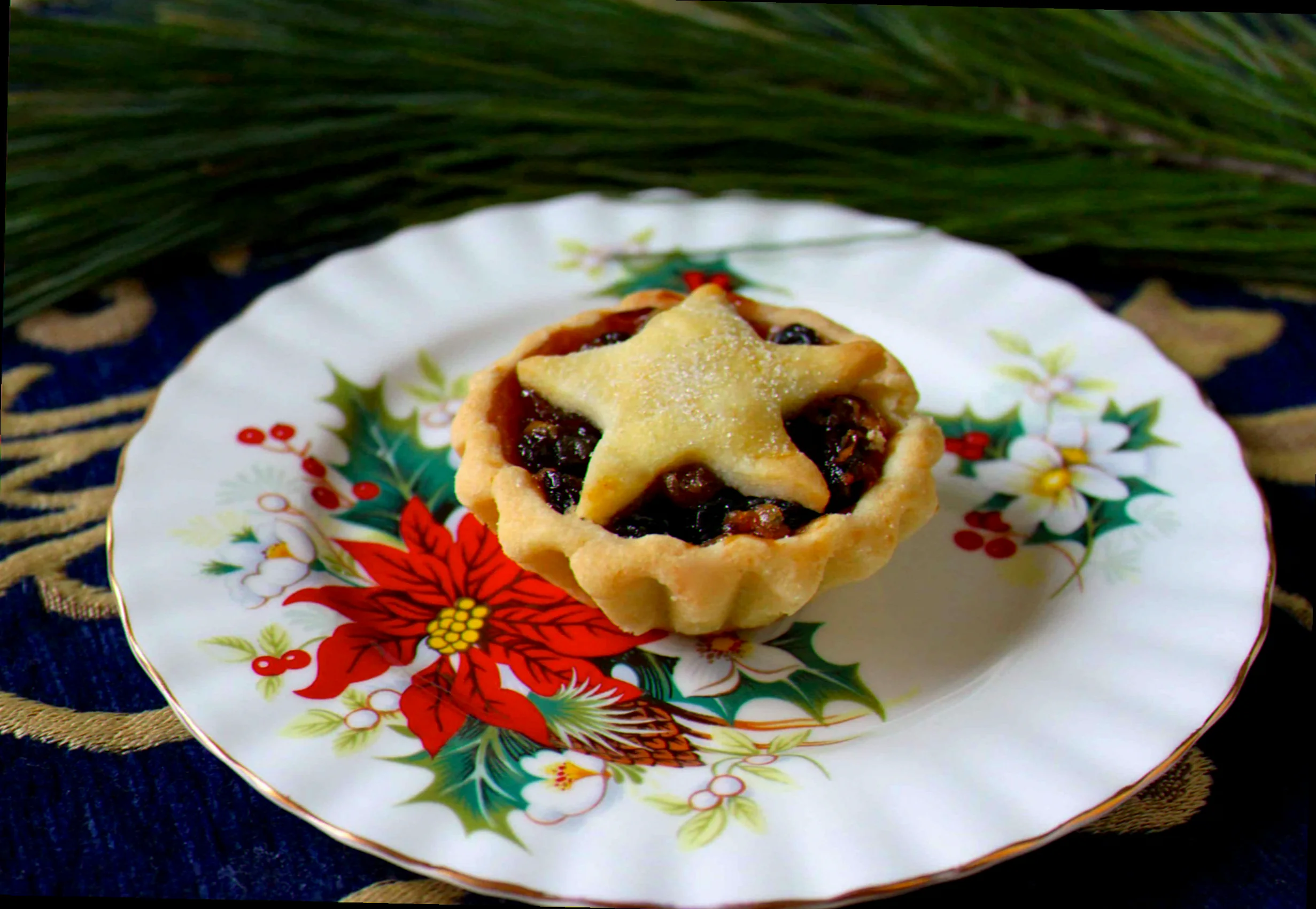
I spent three years getting my butter mince pies recipe wrong before I understood that the enemy wasn’t my oven or my rolling pin, but my own warmth. The first time I tried making these for a Christmas Eve party, I produced something that looked like a crime scene: the pastry was a grey, chewy sludge that slumped into the tins, and the filling had boiled over, cementing the pies to the metal with a burnt-sugar glue. I was devastated, but that failure led me to the revelation that changed everything: the Frozen Grating Technique. Once I stopped trying to “rub” the fat into the flour with my hot, clumsy hands and started treating the butter like a solid block of ice to be shaved, the pastry transformed from a leaden weight into a shattering, golden cloud.
Why Most Versions of Butter Mince Pies Fail
Most people approach mince pies with the “Sturdy Cardboard” philosophy. They use vegetable shortening or, heaven forbid, margarine, because it’s easier to work with at room temperature. The result is a pastry that has the structural integrity of a brick and the flavour of absolutely nothing. It’s a tragedy. A real mince pie should be so rich with butter that it feels like an indulgence, not a chore to chew. The “wrong way” is the room-temperature way. If your dough feels soft and pliable like play-dough before it goes in the oven, you’ve already lost. You’ll end up with a “mealy” crust—that sandy, dusty texture that vanishes into a mushy paste the moment it hits your tongue. We want flakes. We want layers. We want a crust that puts up a fight for a millisecond before shattering into buttery shards.
The Ingredients That Actually Matter
I don’t just “use” ingredients; I curate them like a grudge. I start with 300g of plain flour—nothing fancy, just a good quality all-purpose brand—and I sift it into a bowl with 50g of icing sugar. Most recipes use caster sugar, but icing sugar contains a tiny bit of cornflour which yields a more tender, “short” result. Then comes the hero: 200g of salted butter. I refuse to use unsalted butter here. The salt is the only thing standing between you and a cloying, sugary mess; it cuts through the dried fruit like a knife. I put that butter in the freezer for exactly thirty minutes before I even touch it.
To bind it, I ignore the “ice water” advice you see in every textbook. Water is the enemy of flavour. Instead, I use one large egg yolk and the juice of half an orange—roughly 30ml to 40ml depending on the fruit’s mood. The acid in the orange juice inhibits gluten development, ensuring the pastry stays tender even if you overwork it slightly. Finally, for the soul of the pie, I use 400g of high-quality mincemeat. I usually doctor mine with an extra tablespoon of dark rum and the zest of that same orange, because life is too short for bland fruit.
The Moment Everything Changes: The Frozen Grating Technique
This is the single insight that moved my pies from “edible” to “legendary.” Instead of the traditional method of rubbing the butter into the flour with your fingertips—which inevitably melts the fat and ruins the crumb—I take that rock-hard 200g of frozen butter and grate it directly into the flour using the coarse side of a box grater.
By grating the fat, you create thousands of tiny, cold “petals” of butter. When these hit the hot oven, the water in the butter evaporates instantly, puffing up the flour and creating those micro-layers that define a world-class shortcrust. Before I started doing this, my pastry was flat and dull. Now, it’s architectural. You aren’t mixing; you are distributing solid shards of fat that must remain solid until the very second they enter the 190°C heat.
How I Actually Make It Now — Step by Step
The Shaving Stage: I take my bowl of 300g flour and 50g icing sugar and I grate the 200g of frozen butter straight into it. I use a butter knife to toss the shreds around so every piece of butter is coated in flour. I don’t use my hands yet; the heat from my palms is the enemy. I’m looking for a bowl of what looks like shaggy, buttery wood shavings.
The Hydration Stage: I whisk the egg yolk with 30ml of the orange juice and pour it into a well in the centre. Using a cold metal spoon, I bring the dough together. I’m looking for it to just barely cling together. If it looks a little crumbly, that’s fine. If it looks like a smooth ball of dough, you’ve added too much liquid and your pies will shrink in the oven like a cheap wool sweater.
The Cold Sleep: I wrap the shaggy mass in cling film and flatten it into a disc. I put it in the fridge for at least an hour. This isn’t optional. The flour needs time to hydrate, and the butter needs to re-solidify. If you skip this, your pastry will be tough and your soul will be weary.
The Assembly: I roll the dough out on a floured surface to about 3mm thickness. I use a 10cm fluted cutter for the bases and an 8cm cutter for the tops. I gently press the bases into a non-stick muffin tin. I drop a generous teaspoon of the 400g mincemeat into each. Don’t overfill them; if the mincemeat touches the edge of the pastry, it will boil over and weld the pie to the tin. I dampen the edges of the lids with a tiny drop of water, press them on, and then—this is vital—I put the whole tray back in the fridge for 20 minutes before baking.
The Heat Treatment: I bake them at 190°C for about 15 to 18 minutes. I am looking for a deep, golden tan, not a pale yellow. A pale pie is an undercooked pie. I listen for the faint sizzle of the butter and smell for that toasted, nut-like aroma that tells me the sugars in the flour have caramelised.
The Failures I Still See — and How to Fix Them
- The Purple Volcano: This is when the filling leaks out and turns the crust purple. It’s caused by overfilling or failing to crimp the edges properly. The fix is to leave at least a 5mm gap between the filling and the top of the pastry rim, and to poke a small steam vent in the lid with a toothpick.
- The Greasy Puddle: If your pies come out sitting in a pool of melted butter, your dough was too warm when it went into the oven. The fat leaked out before the flour could set. The fix is the “Double Chill”—chill the dough after mixing, and chill the assembled pies again before baking.
- The Shrinking Lid: If your lids pull away from the sides, you’ve overworked the gluten or didn’t let the dough rest. The fix is to stop kneading the second the dough holds together and ensure that one-hour fridge rest is strictly observed.
When I Make This and What I Serve It With
These pies are the cornerstone of my Christmas Eve. They earn their place the moment the sun goes down and the house gets quiet. I serve them warm—never piping hot, as the sugar will burn your tongue—with a massive dollop of brandy butter that I’ve whipped until it’s as light as air.
If I’m feeling particularly indulgent, I’ll serve them alongside a Sharp Cheddar Cheese platter. The saltiness of a three-year-aged cheddar against the sweet, spiced mincemeat is a revelation that most people are too scared to try. To drink, it has to be a heavily spiced Mulled Wine or a very cold glass of Tawny Port. The acidity in the wine cuts through the richness of the butter perfectly.
Substitutions I’ve Tested Honestly
- Butter → Lard: I tried a 50/50 split of butter and lard once. The texture was incredibly flaky, but it tasted like a pork pie. Unless you’re making savoury meat pies, stick to 100% butter.
- Orange Juice → Cold Water: It works, but the pastry is noticeably “tougher” and lacks that subtle citrus high note that makes the fruit filling pop. Use the juice.
- Gluten-Free Flour → Standard Plain Flour: I’ve tried this for friends. It doesn’t “shatter”; it disintegrates into sand. If you must do it, you need to add an extra egg yolk and a teaspoon of xantham gum, but honestly, it’s a shadow of the real thing.
Questions I Get Asked About Butter Mince Pies
Can I make the pastry in a food processor?
You can, but you shouldn’t. The blades move so fast they generate heat, which melts the butter. If you must use one, pulse it in very short bursts and stop the moment it looks like breadcrumbs. But really, just use a grater. It takes two minutes.
Related topics: Quick and easy mince pies recipe · Recipe for reese peanut butter pie · Recipe for frozen pies
Why did my pies get stuck in the tin even though it’s non-stick?
Because your filling leaked. Sugar is a more powerful adhesive than industrial glue once it boils and cools. Next time, be stingy with the filling and make sure your lids are sealed tight. If they are stuck, put the tin back in the warm oven for 60 seconds to soften the sugar before trying to lift them again.
Can I freeze these before baking?
Yes, and you should. I often make a double batch, freeze them raw in the tins, then pop them into freezer bags. You can bake them straight from frozen; just add about 5 minutes to the cooking time. They actually turn out flakier that way because the butter stays cold for longer.