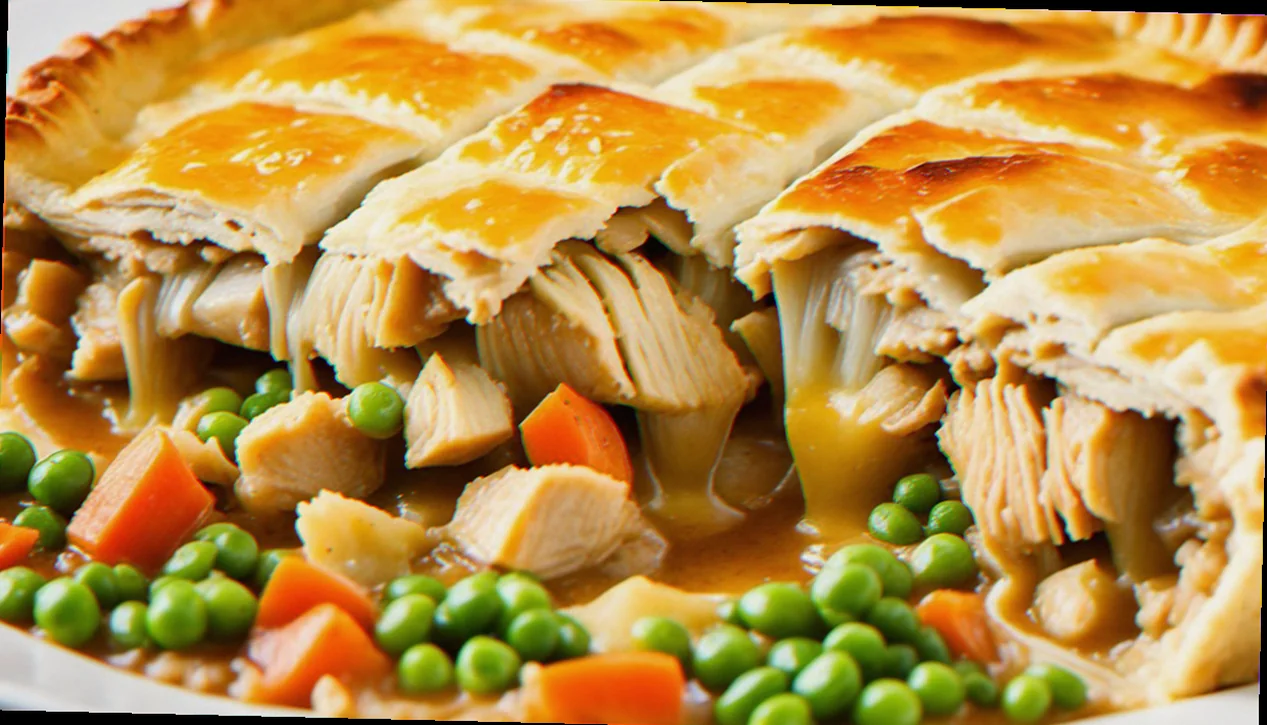
The first time I made a proper cooked chicken pie, the crust was a pale, flabby shroud, and the filling, while edible, tasted vaguely of boiled socks. It was a disaster, a culinary crime scene I’d inflicted on myself and my unsuspecting partner. For years, I kept making chicken pies, each one a slightly less offensive version of the last, until I had a revelation: The binding starch method was the single insight that transformed my sad, soupy pies into something truly magnificent.
Why Most Versions of Cooked Chicken Pie Fail
The cardinal sin, the one I see everywhere and committed myself for far too long, is the “dump and stir” method. People just toss cooked chicken, some vegetables, and maybe a can of condensed soup into a pastry shell and bake. What you get is a watery, sad affair. The chicken disintegrates, the vegetables swim in a greyish liquid, and the bottom crust becomes a soggy, regrettable mess. It’s the culinary equivalent of wearing socks with sandals – functional, perhaps, but an aesthetic and textural abomination. My pies used to be like that. Now, they’re a golden, steaming testament to patience and precision.
The Ingredients That Actually Matter
Forget those dusty spice racks you think you need. For a truly stellar chicken pie, you need a few key players, and you need to treat them right.
First, the chicken. I always use 240g of boneless, skinless chicken thighs. Thighs, not breasts. Breasts are too lean; they dry out and become fibrous in the long bake. Thighs have just enough fat to stay succulent and impart a richer flavour to the sauce. I poach them gently in seasoned water until just cooked, then shred them by hand. This gives a better texture than dicing.
Next, the aromatics. A medium onion, finely diced, is essential. I sauté it until it’s translucent and just beginning to sweeten, not browned and bitter. And then there’s 2 cloves of garlic, minced, added in the last minute of sautéing so it doesn’t burn and turn acrid.
For the sauce, the unsung hero is 50g of unsalted butter. It’s the base for my roux, the foundation of flavour and structure. And speaking of structure, I rely on 30g of plain flour. This, combined with the butter, creates a roux that will thicken my sauce beautifully, preventing that dreaded soupy outcome.
For liquid, 300ml of good quality chicken stock is non-negotiable. If you’re using a stock cube, at least make it a decent brand. I prefer homemade if I have it, but a good store-bought liquid stock works wonders. And to round out the richness, I swirl in 100ml of double cream at the very end. It makes the sauce luxurious without being overly heavy.
Finally, the pastry. I know it’s tempting to reach for ready-made, but I’ve found 250g of good quality, all-butter puff pastry is worth the extra few quid. It puffs up beautifully, giving that glorious golden crust that shatters with every bite.
The Moment Everything Changes: The Binding Starch Method
The revelation, the game-changer for me, was embracing the binding starch method. It’s deceptively simple, but it’s the scientific backbone of a pie that holds together. Instead of relying solely on flour in a roux to thicken, I create a slurry of flour and cold liquid. This allows the starch granules to hydrate evenly, preventing lumps and ensuring a smooth, consistent sauce that clings to the chicken and vegetables. It’s the difference between a gravy that runs like water and a sauce that embraces every morsel. Without this, my pies were always destined for soupy mediocrity. With it, they’re a revelation.
How I Actually Make It Now — Step by Step
Building the Flavour Base: I melt the 50g of butter in a large, oven-safe pan or casserole dish over medium heat. Once it’s shimmering, I add the finely diced onion and sauté gently for about 8-10 minutes until it’s soft and translucent, not browned. This is crucial for sweetness. Then, I stir in the minced garlic and cook for another minute until fragrant, being careful not to let it burn.
Creating the Thickening Power: I sprinkle the 30g of plain flour over the onions and garlic and stir it into the butter to form a paste, cooking for 1-2 minutes. This cooks out the raw flour taste. Then, I gradually whisk in the 300ml of chicken stock, a little at a time, ensuring each addition is fully incorporated before adding more. I bring the mixture to a simmer, whisking constantly, until it starts to thicken. This is where many go wrong – rushing this step leads to a lumpy sauce.
Enriching and Binding: Now for the binding starch. In a small bowl, I whisk together 30g of plain flour (yes, a bit more flour here, but it’s for the slurry!) with 100ml of cold water until perfectly smooth. I pour this slurry into the simmering sauce, whisking continuously. The sauce will thicken dramatically. I let it bubble gently for 2-3 minutes, watching it become glossy and smooth, almost like a thick custard. I taste and season with salt and freshly ground black pepper.
Bringing it all Together: I add the shredded chicken thighs to the thickened sauce and stir to coat. Then, I gently stir in 100g of frozen peas and 50g of sweetcorn. These cook through in the residual heat and during baking, adding pops of sweetness and colour. Finally, I swirl in the 100ml of double cream, just to melt through and add richness. The filling should be thick enough to coat the back of a spoon, not runny.
The Golden Crown: I preheat my oven to 200°C (180°C fan/Gas Mark 6). I pour the filling into a pie dish. I unroll the 250g of puff pastry and drape it over the filling, crimping the edges to seal. I make a few slits in the top to allow steam to escape. Then, for that beautiful golden sheen, I brush the top with an egg wash (one egg beaten with a splash of milk). I place the pie dish on a baking sheet to catch any drips and bake for 25-30 minutes, or until the pastry is gloriously puffed and golden brown. The smell that fills the kitchen at this point is pure comfort.
The Failures I Still See — and How to Fix Them
- Watery Filling: This is the classic “dump and stir” problem. The cause is insufficient thickening, or relying on ingredients that release too much moisture (like raw vegetables cooked directly in the sauce for too long). The fix: Embrace the binding starch method and ensure your sauce is already thick enough to coat a spoon before adding it to the pie dish.
- Soggy Bottom Crust: This happens when the filling is too wet, or when the pie dish isn’t preheated. The fix: Make sure your filling is thick and, crucially, bake the pie on a preheated baking sheet. This helps conduct heat to the bottom crust, setting it before it can become saturated.
- Pale, Underbaked Pastry: This is pure impatience. The fix: Don’t be afraid of colour! A properly baked puff pastry is a deep, burnished gold. If yours is looking pale, give it another 5-10 minutes, even if it means turning down the heat slightly to prevent burning the top. The internal temperature needs to reach the filling.
When I Make This and What I Serve It With
My cooked chicken pie is my ultimate comfort food, a dish reserved for those blustery Sunday afternoons when the world outside feels a bit too much. It’s the antidote to a stressful week. It sits proudly on the table, steaming and inviting. I love serving it with a simple, bright green salad with a sharp vinaigrette to cut through the richness. And for something more substantial, creamy mashed potatoes are a classic for a reason – they’re the perfect vehicle for sopping up any stray gravy. A glass of light-bodied Pinot Noir is my go-to drink; its earthy notes complement the chicken beautifully without overpowering it.
Substitutions I’ve Tested Honestly
- Chicken Thighs → Chicken Breasts: I’ve tried it, because I know some people are squeamish about thighs. What happened? Dry, stringy chicken that leached water into the sauce. Honest verdict: It’s just not the same. Stick to thighs for the best flavour and texture.
- Puff Pastry → Shortcrust Pastry: I’ve used shortcrust for the base, especially when making individual pot pies. Tested result: It works perfectly well for a base, providing a sturdy foundation. For the lid, however, puff pastry is irreplaceable for that glorious lift.
- Dairy → Dairy-Free: This is tough. For a dairy-free pie, I’d use a good olive oil or dairy-free butter for the roux. For the cream, a full-fat coconut cream (the thick part from the can) can work, but it adds a subtle coconut note. Whether it genuinely works or just barely passes: It barely passes for me. The richness and mouthfeel of dairy are hard to replicate without compromise.
Questions I Get Asked About Cooked Chicken Pie
“Can I use leftover roast chicken?”
Absolutely, but with a caveat. Leftover roast chicken is already cooked and can be a bit drier. If you use it, make sure to shred it into smaller pieces and try to incorporate any pan juices into your sauce for extra flavour. Don’t overcook it in the sauce; just heat it through.
“My pastry is too hard to cut.”
This usually means your pastry is too thick, or you haven’t rested it enough. If it’s tough to roll out, it’s likely too cold. Let it soften slightly at room temperature before attempting to roll. For puff pastry, ensure you’re using enough force to seal the edges properly.
Related topics: Recipes for chicken and asparagus pie · Recipes on chalkboards apple pie · Pie dough recipes with butter
“How do I stop the bottom crust going soggy when I use a glass dish?”
This is the question that plagued me for years! The answer, which I learned the hard way, is simple: use a metal pie dish and bake it on a preheated baking sheet. Metal conducts heat much better than glass, and the baking sheet provides an extra layer of insulation and heat transfer to the base, ensuring a crisp bottom every time. It’s a small change that makes a world of difference.