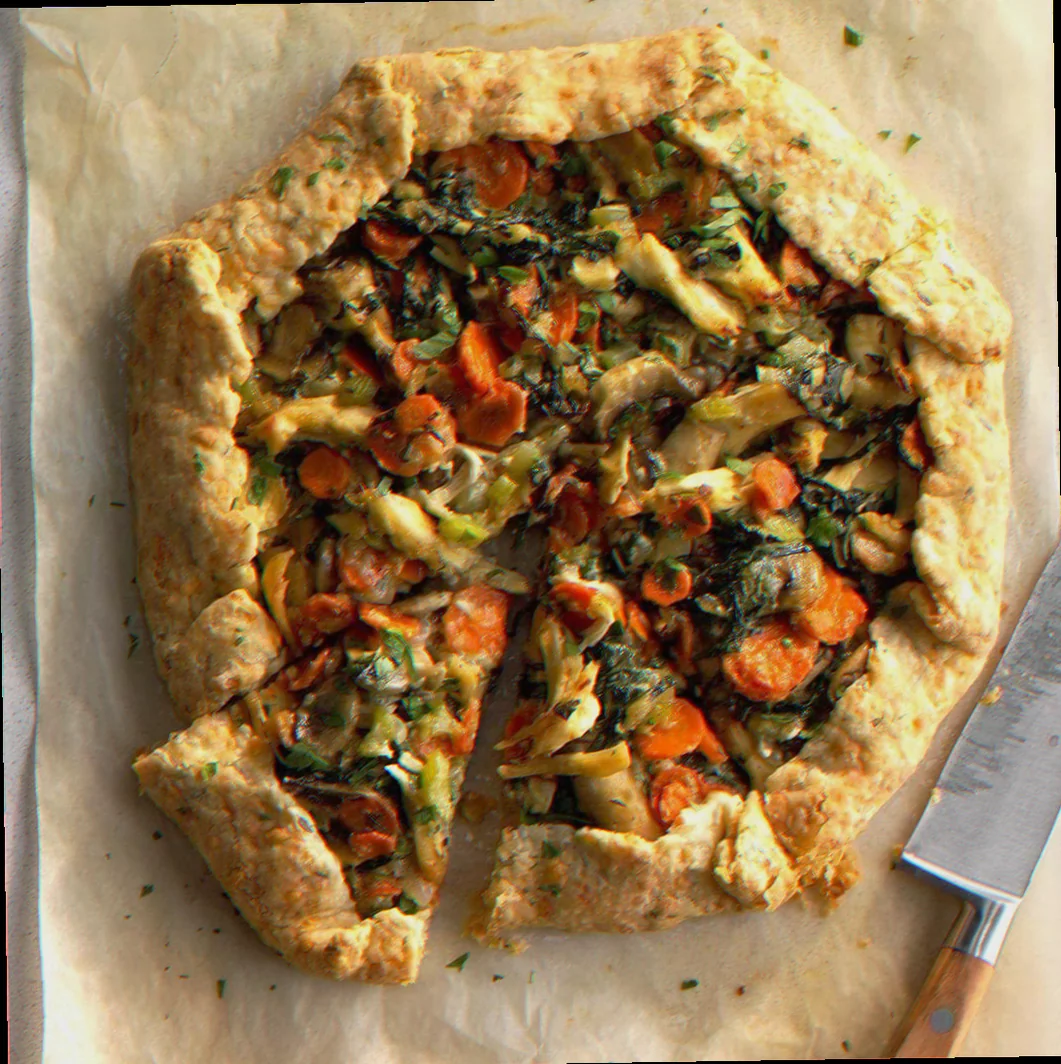
The most common reason savory pie crust dinners fail is Soggy Bottom Syndrome. This occurs when the base of your pie remains a pale, gummy, translucent paste rather than a crisp, structural foundation, usually caused by moisture migration from the filling or under-developed starch gelatinization. This guide will diagnose every failure point—from the “Elastic Shrinkage” of the sides to the “Cardboard Crust” of over-worked dough—to ensure your dinner pies are structurally sound and shatteringly crisp.
What Perfect Savory Pie Crust Actually Looks, Feels, and Tastes Like
Before diagnosing a failure, you must recognize the benchmark. A successful savory pie crust is a feat of engineering: it must be strong enough to hold heavy fillings like chicken pot pie or braised beef, yet delicate enough to flake upon contact with a fork.
| Stage | Success marker — what you should see / feel / smell / hear |
|---|---|
| Raw Dough | Cold to the touch; visible, distinct “marbling” of fat chunks ranging from pea-sized to nickel-sized; not sticky, but holds together when squeezed. |
| Mid-Bake | The oven smells of toasted butter; the edges have begun to lift slightly from the pan; a visible “hissing” sound as steam escapes the vents at 200°C. |
| Finished | Deep golden-brown (not pale tan); the surface has a slight sheen; the bottom crust sounds hollow and “woody” when tapped with a knuckle. |
| When Serving | The crust shatters into distinct layers rather than crumbling into sand; the flavor is buttery and slightly salty, providing a neutral counterpoint to the rich filling. |
The Ingredient Failures — Wrong Choices Before You Even Start Cooking
- The Cardboard Crust (Toughness): Caused by using high-protein bread flour or “00” pizza flour → fix: Use All-Purpose flour (10-11% protein) or a 50/50 mix of AP and Pastry flour to limit gluten development.
- The Mealy Mess (Lack of Flakes): Caused by using room-temperature butter or over-incorporating the fat into a “sandy” texture → fix: Use European-style butter (minimum 82% butterfat) chilled to 4°C, and stop mixing while chunks are still visible.
- The Grey Crust (Dullness): Caused by omitting acid or using old flour → fix: Add 5ml of chilled Apple Cider Vinegar or Lemon Juice to the water to tenderize the gluten and brighten the color.
The Technique Failures — What Goes Wrong During Cooking
- Elastic Shrinkage: The crust pulls away from the edges and slumps into the bottom of the tin. What it looks like: A tiny, thick-bottomed pie with no walls. → caused by skipping the “Resting Phase” or stretching the dough while lining the pan. → fix: Rest dough in the fridge for 30 minutes after rolling, and always “drop” the dough into the corners rather than pulling it.
- The Structural Breach (Leaking): Filling seeps through the sides or top. Symptom: A scorched, sticky mess on the baking sheet. → cause: Improper crimping or lack of steam vents. → fix: Use an egg-yolk “glue” (1 yolk + 15ml heavy cream) to seal the top and bottom crusts, and cut at least four 2cm slits in the top to release internal pressure.
- The Gummy Interior: The top looks done, but the layer touching the filling is raw. Symptom: A “dough-line” visible when sliced. → cause: Filling was added while still warm. → fix: Chill all savory fillings to below 10°C before adding them to the raw crust.
- The Edge Burn: The crimped edges turn black while the center is raw. Symptom: Acrid smell and charred perimeter. → cause: Uneven heat distribution or lack of protection. → fix: Apply a foil “pie shield” to the edges after the first 15 minutes of baking at 200°C.
The Equipment Failures — When Your Tools Are the Problem
- The Glass Pan Trap: Glass is a poor conductor of heat. While it allows you to see the bottom, it often results in Soggy Bottom Syndrome because it takes too long to get hot. → fix: Use a heavy-gauge dull metal pie tin or a perforated tart pan. If using glass, preheat a heavy baking sheet or pizza stone at 220°C and place the pie directly on it to “shock” the bottom crust.
- The “Warm Hands” Failure: Using your bare palms to mix dough transfers body heat (37°C), melting the fat. → fix: Use a metal pastry cutter or a food processor (pulsed briefly). If using hands, use only your fingertips and rinse them in ice water periodically.
- The Steam Explosion: A solid lid with no chimney. → fix: Use a “pie bird” or a large central vent. This allows thick savory gravies to bubble and reduce without blowing the lid off the crust.
The Full Recipe — Built Around Preventing Every Failure Above
- All-Purpose Flour — 315g — [Prevents Cardboard Crust by keeping protein levels moderate]
- Unsalted European Butter (82% fat) — 225g — [Cubed and chilled to 4°C to prevent Mealy Mess]
- Ice Water — 60ml to 100ml — [Must be <4°C to prevent fat melting during hydration]
- Fine Sea Salt — 5g — [Essential for flavor; prevents a “flat” tasting savory crust]
- Apple Cider Vinegar — 5ml — [Inhibits gluten to prevent Elastic Shrinkage]
- Egg Yolk + Heavy Cream — 1 each — [For the “glue” and the gold finish]
Method:
- The Fat Cut: Combine flour and salt. Add chilled butter cubes. Use a pastry cutter to break butter into various sizes (some like peas, some like nickels). — [Prevents Mealy Mess] — success marker: You should see distinct “flakes” of yellow butter coated in white flour.
- Hydration: Add vinegar to 60ml ice water. Drizzle over flour while tossing with a fork. Add more water 15ml at a time only until the dough barely holds when squeezed. — [Prevents Gummy Interior] — success marker: The dough should look shaggy and almost dry, not like a smooth ball.
- The Chill: Wrap in plastic and flatten into a disk. Refrigerate for at least 60 minutes. — [Prevents Elastic Shrinkage] — success marker: The dough feels firm and cold.
- The Roll: Roll on a lightly floured surface to 3mm thickness. “Walk” the dough into the pan—do not stretch it. — [Prevents Shrinkage] — success marker: The dough overhangs the pan by 2cm without being taut.
- The Filling Entry: Ensure your savory filling (Chicken, Beef, or Veg) is cold (below 10°C). — [Prevents Soggy Bottom] — success marker: No steam should rise from the filling as it hits the pastry.
- The Seal and Vent: Brush the rim with egg wash, place the top crust, and crimp tightly. Cut large vents. — [Prevents Structural Breach] — success marker: Visible steam escaping from vents 20 minutes into baking.
- The Heat Shock: Place pie on a preheated baking sheet at 200°C for the first 20 minutes, then reduce to 180°C. — [Prevents Soggy Bottom] — success marker: The bottom of the crust is browned and rigid when checked with a spatula.
How to Rescue Pie Crust When It Has Already Gone Wrong
- If the bottom is soggy after baking: Remove the pie from the tin (if possible) and place it directly on the lowest oven rack or a preheated pizza stone for 5–8 minutes at 190°C. This provides a “last-second” crisping but may overcook the filling slightly.
- If the crust is shrinking in the oven: This cannot be undone once the proteins have set. However, you can “patch” the gaps with extra dough scraps baked separately and “glued” on with a thick savory gravy to hide the deformity.
- If the top is burning but the filling is cold: Tent the entire pie loosely with aluminum foil and lower the oven temperature to 160°C. This creates a heat shield, allowing the internal temperature to rise without further browning the exterior.
- If the dough is too crumbly to roll: It is under-hydrated. Do not add water now; it will be patchy. Instead, grate the cold dough into the pie tin and press it firmly into a “press-in” crust. It won’t be flaky, but it will be edible and structural.
Make-Ahead: Which Failures This Introduces and How to Avoid Them
The biggest failure in make-ahead savory pies is Starch Retrogradation, where the crust becomes hard and “stale” in the fridge, or Moisture Migration, where the filling turns the crust into mush over time.
- To Store Raw: You can keep the shaped, unbaked pie in the freezer for up to 3 months. Do not thaw before baking. Increase bake time by 15 minutes and start at 210°C to ensure the fat melts and creates steam before the dough softens.
- To Store Cooked: If reheating a whole pie, avoid the microwave (the “Death of Crispness”). Reheat in an oven at 175°C for 20 minutes. This draws moisture back out of the crust and re-crisps the butter layers.
Related topics: Littice pie crust recipe · Pie crust recipes without yeast · Beef pie crust
Diagnostic FAQ
My crust turned out like a hard cracker — what went wrong?
This is the Over-Worked Protein failure. You likely added too much water or handled the dough until it felt “smooth” like bread dough. This developed the gluten into a tough web. Next time, stop mixing while it still looks like a mess.
It looked perfect but tasted like nothing — where did I go wrong?
This is an Ingredient Quality failure. Savory crusts require more salt than sweet crusts. If you used unsalted butter and didn’t add at least 5g of sea salt to the flour, the crust will taste like wet cardboard regardless of texture.
Everything looked perfect until I cut it, then the bottom fell out — why?
This is the Filling Viscosity failure. If your savory filling (gravy) was too thin, it saturated the bottom crust from the inside out during the final 10 minutes of baking. Fix: Use a roux or cornstarch slurry to ensure the filling is “nappe” (coats the back of a spoon) before it goes into the pie.