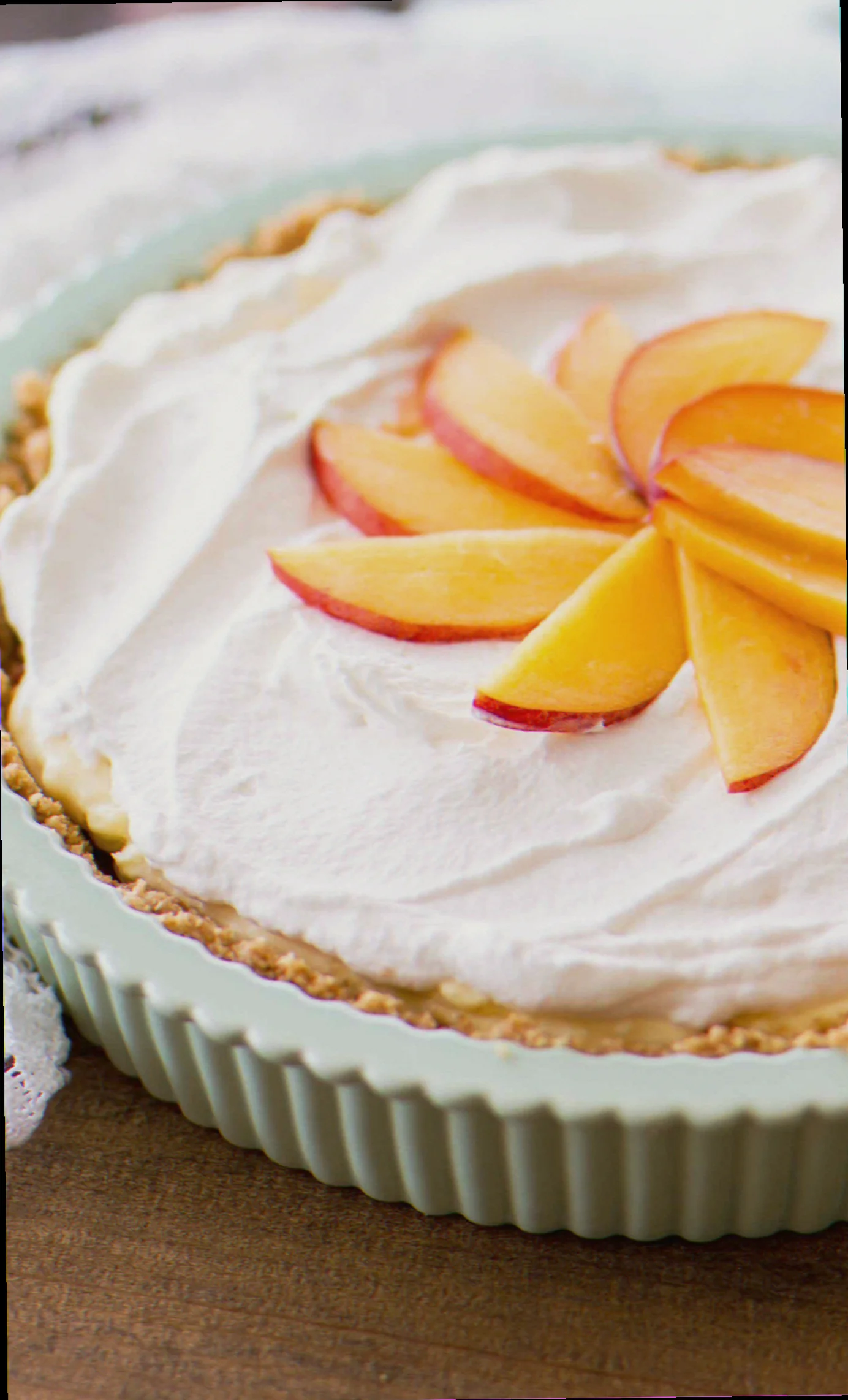
Pudding Bottom Peach Pie: Diagnostic Guide
My Pudding Bottom Peach Pie Has a Soggy Bottom. What Went Wrong and How Do I Fix It?
A soggy bottom is the most common and disheartening failure for any pie, and the pudding-bottom peach pie is particularly susceptible. Instead of a crisp, golden foundation, you’re left with a pale, yielding crust that tastes of raw flour and dampness. This often manifests as a pie that’s structurally unsound, collapsing into a mushy mess when you attempt to slice it. This guide will dissect every potential pitfall, from ingredient selection to final serving, ensuring your next pudding-bottom peach pie is a triumph of texture and flavour.
What Perfect Pudding Bottom Peach Pie Actually Looks, Feels, and Tastes Like
The benchmark for success is a pie that offers a delightful textural contrast and a harmonious blend of sweet, slightly tart fruit and creamy pudding.
| Stage | Success marker — what you should see / feel / smell / hear |
|---|---|
| Before cooking | Raw crust is pale and slightly crumbly but holds its shape when pressed. Pudding filling is thick, glossy, and opaque, with a faint vanilla aroma. Peaches are firm but yielding. |
| During cooking | Crust edges begin to turn a deep golden brown, approximately 20 minutes into baking at 190°C. Pudding filling bubbles gently in the center, with an aroma of baked peaches and vanilla, reaching an internal temperature of 95°C in the thickest part of the pudding. |
| At the finish | Crust is uniformly golden brown, firm to the touch, and sounds hollow when tapped. Pudding is set but still has a slight wobble. A faint, sweet, caramelized peach aroma fills the air. |
| When serving | A clean slice reveals distinct layers: a crisp, flaky crust, a smooth, creamy pudding layer, and tender, syrupy peaches. The first bite offers a satisfying crunch from the crust, followed by the yielding softness of the peaches and the rich, velvety pudding. Flavours are bright peach upfront, mellowing into warm vanilla and a hint of cinnamon. |
The Ingredient Failures — Wrong Choices Before You Even Start Cooking
Ingredient quality is paramount. The wrong choices here sow the seeds of disaster before the oven is even preheated.
Soggy Bottom: caused by using all-purpose flour with a high protein content in the crust. This leads to excessive gluten development, making the crust tough and less able to crisp up. → fix: Use pastry flour or a 50/50 blend of all-purpose and cake flour for the crust. This lower protein content ensures a tender, flaky texture that crisps beautifully.
Grainy Pudding: caused by using cornstarch that is not fresh or has been exposed to moisture. Stale or clumpy cornstarch can lead to uneven thickening and a gritty mouthfeel. → fix: Ensure your cornstarch is fresh, free-flowing, and stored in an airtight container away from humidity. If in doubt, sift it before use.
Watery Peach Filling: caused by using underripe peaches or peaches with a low sugar content. Underripe fruit releases more free liquid when cooked, overwhelming the pudding. → fix: Select ripe, fragrant peaches that yield slightly to gentle pressure. If your peaches are slightly tart, you may need to increase the sugar slightly.
The Technique Failures — What Goes Wrong During Cooking
Execution errors can sabotage even the best ingredients. Precision is key to avoiding these common pitfalls.
Soggy Bottom: what it looks/tastes like – A pale, damp crust that tears easily. → caused by applying the hot pudding filling directly to an unbaked or underbaked crust. The moisture from the pudding seeps into the raw dough. → fix: Blind-bake the pie crust for 15-20 minutes at 190°C until it’s lightly golden and set before adding the filling. This creates a barrier and pre-cooks the bottom.
Seized Pudding: symptom – The pudding becomes a thick, lumpy, rubbery mass. → cause – Adding the hot liquid too quickly to the cornstarch slurry, or overcooking the pudding after it has thickened. The starch granules clump and cook unevenly. → fix: Whisk the hot liquid into the cornstarch slurry gradually, tempering the cornstarch, and cook the pudding over medium heat, stirring constantly, only until it thickens to the desired consistency (about 2-3 minutes after it begins to bubble).
Rubbery Texture: symptom – The pudding layer is dense and chewy, not smooth and creamy. → cause – Overcooking the cornstarch-based pudding. Prolonged heating breaks down the starch molecules, leading to a rubbery texture. → fix: Remove the pudding from the heat as soon as it coats the back of a spoon and has a thick, glossy consistency. The residual heat will continue to cook it slightly as it cools.
Overcooked Peaches: symptom – Peaches are mushy, lack distinct flavour, and have lost their vibrant colour. → cause – Adding peaches too early in the cooking process or cooking them at too high a temperature for too long. → fix: Gently fold the prepared peaches into the thickened pudding just before assembling the pie. The residual heat will warm them through without overcooking them.
The Equipment Failures — When Your Tools Are the Problem
The right equipment can prevent many of these issues. Don’t let a faulty tool be the reason for a failed pie.
Pie Plate: A flimsy, thin pie plate can lead to uneven baking and a soggy bottom. The heat dissipates too quickly. → what to use instead: A ceramic or heavy-gauge metal pie plate. These retain heat better, promoting even browning and crisping of the crust. → why it matters: Even heat distribution is crucial for a perfectly cooked pie crust.
Saucepan: A thin-bottomed saucepan can cause the pudding to scorch on the bottom and cook unevenly. → the failure it produces: Scorched pudding with a burnt taste and gritty texture. → the fix: Use a heavy-bottomed saucepan, preferably stainless steel or enamel-coated. → the workaround: If you only have a thin-bottomed pan, use a double boiler or stir the pudding constantly and very carefully over low heat.
Oven Thermometer: An inaccurate oven can lead to under- or over-baking, directly impacting crust crispness and pudding setting. → why this specific tool exists for this dish: It ensures the critical blind-baking and final baking temperatures are precise. → acceptable substitute: Trusting your oven’s internal temperature gauge if it is reliable, but a separate thermometer is highly recommended for accuracy.
The Full Recipe — Built Around Preventing Every Failure Above
Pastry Flour — 250g — the failure this specification prevents: Soggy bottom and tough crust.
Cold Unsalted Butter — 125g, cubed — why this form/grade/temperature matters: Crucial for flaky crust; cold butter creates steam pockets.
Ice Water — 60-80ml — the failure this prevents: A crust that is tough or doesn’t hold together.
Ripe Peaches — 750g, peeled, pitted, and sliced — the failure this prevents: Watery filling and mushy texture.
Granulated Sugar — 150g (divided) — why this specification matters: 100g for pudding, 50g for peaches; sweetness balanced for both components.
Fresh Cornstarch — 40g — the failure this prevents: Grainy or seized pudding.
Whole Milk — 500ml — why this form/grade/temperature matters: Full fat provides richness and helps pudding emulsify.
Large Egg Yolks — 3 — the failure this prevents: Unstable pudding emulsion and lack of richness.
Vanilla Extract — 1 teaspoon — why this specification matters: For flavour depth.
Ground Cinnamon — ½ teaspoon (optional) — the failure this prevents: Bland peach flavour.
Method:
Prepare the Pie Crust: In a large bowl, combine flour and 1 teaspoon of sugar. Cut in cold butter using a pastry blender or fingertips until the mixture resembles coarse crumbs with some pea-sized pieces of butter remaining — this prevents a tough crust. Gradually add ice water, 1 tablespoon at a time, mixing until the dough just comes together. Do not overmix — this prevents a tough crust. Form into a disc, wrap in plastic, and chill for at least 30 minutes.
Blind-Bake the Crust: Preheat oven to 190°C. Roll out chilled dough and fit into a 23cm pie plate. Crimp edges. Line with parchment paper and fill with pie weights or dried beans. Bake for 20 minutes. Remove parchment and weights. Bake for another 5-10 minutes, until lightly golden — this is where Soggy Bottom is prevented by creating a barrier. Success marker: Crust edges are beginning to turn golden brown.
Prepare the Pudding: While the crust bakes, whisk together 100g sugar and cornstarch in a heavy-bottomed saucepan — this prevents scorching and uneven thickening. Gradually whisk in milk until smooth. Cook over medium heat, stirring constantly, until the mixture thickens and begins to bubble, about 5-7 minutes — this prevents Seized Pudding. Success marker: The mixture coats the back of a spoon and has a glossy appearance.
Temper the Egg Yolks: In a separate bowl, whisk egg yolks with vanilla extract. Slowly ladle about 1 cup of the hot milk mixture into the egg yolks, whisking constantly to temper them — this prevents scrambled eggs and ensures a smooth pudding. Gradually whisk the tempered egg mixture back into the saucepan.
Finish the Pudding: Return the saucepan to medium-low heat and cook, stirring constantly, for 1-2 minutes more, until the pudding is thick and smooth. Do not boil — this prevents Rubbery Texture. Success marker: Pudding is thick enough to leave a trail when a spoon is drawn through it.
Prepare the Peaches: In a separate bowl, gently toss sliced peaches with 50g sugar and cinnamon (if using) — this prevents Overcooked Peaches.
Assemble the Pie: Carefully spoon the thickened pudding into the partially baked pie crust, spreading it evenly — this is where Soggy Bottom is prevented by the blind-baked crust. Gently fold the prepared peaches into the pudding filling, distributing them evenly.
Bake the Pie: Reduce oven temperature to 175°C. Bake for 30-40 minutes, or until the pudding is set and the crust is a deep golden brown — this ensures the pudding fully sets and the crust crisps. Success marker: The pudding is set with only a slight wobble in the center, and the crust is a rich, even golden brown.
How to Rescue [Pudding Bottom Peach Pie] When It Has Already Gone Wrong
If Soggy Bottom has happened: This is difficult to fully recover from once the pie is baked. If the bottom is only slightly damp, you can try placing the pie on a baking sheet in a preheated 150°C oven for 10-15 minutes to try and crisp it up. However, it will likely remain compromised. For a severely soggy bottom, the best course of action is to salvage the filling by carefully scooping it out and serving it with a side of crisp cookie or shortbread, or to start again with a properly blind-baked crust.
If Seized or Rubbery Pudding has happened: Unfortunately, a seized or rubbery pudding cannot be rescued. The starch has been irrevocably overcooked. You will need to discard the pudding layer and try again.
If Overcooked Peaches have happened: If the peaches are mushy but the pudding is fine, you can try to salvage the pie by carefully removing the peaches and serving the pudding layer separately, perhaps with fresh, lightly macerated peaches on top.
If Catastrophic Failure (e.g., burnt crust, completely split pudding): If the crust is burnt, it’s unlikely to be salvageable for serving. If the pudding has split dramatically and cannot be re-emulsified, it’s best to start over. You can salvage any properly cooked peaches or crust scraps by turning them into a different dessert, like peach crumble or pie crust cookies.
Make-Ahead: Which Failures This Introduces and How to Avoid Them
Making pudding-bottom peach pie ahead introduces the risk of Soggy Bottom due to moisture migration from the filling into the crust over time.
- The Failure: Extended storage allows the pudding’s moisture to soften the crust.
- The Cause: Ambient moisture in the refrigerator and the inherent moisture of the filling.
- The Protocol: If you must make it ahead, bake the pie until it is completely cooled. Store it uncovered in the refrigerator for no more than 12-18 hours. Just before serving, reheat the pie in a 150°C oven for 15-20 minutes to help crisp the crust again. Do not cover tightly until it has fully cooled to prevent condensation.
Related topics: Strawberry and cream cheese pie recipe · Dump recipe for chicken pot pie · Recipe apple pie crust
Diagnostic FAQ — Real Failures, Real Fixes
My Pudding Bottom Peach Pie turned out with a pale, soft bottom crust. What went wrong?
This is the classic Soggy Bottom. The most likely cause is insufficient blind-baking of the pie crust before the filling was added. For next time, ensure you blind-bake the crust for at least 20 minutes at 190°C until it’s visibly set and starting to turn golden before adding the pudding and peaches.
It looked right but tasted bland and slightly chalky — where did I go wrong?
The blandness likely stems from low-quality or underripe peaches. The chalky texture suggests stale or improperly incorporated cornstarch, leading to a Grainy Pudding. For next time, select fragrant, ripe peaches and ensure your cornstarch is fresh and whisked thoroughly into the liquid before heating.
Everything looked perfect until I cut into it, and the pudding layer was runny — why did it collapse?
This indicates the pudding did not set properly. The most probable cause is undercooking the pudding, failing to reach the necessary thickening stage. The success marker for a properly thickened pudding is that it coats the back of a spoon and leaves a trail when a spoon is drawn through it. Ensure you cook it until this stage, and for the final baking, it should have only a slight wobble.