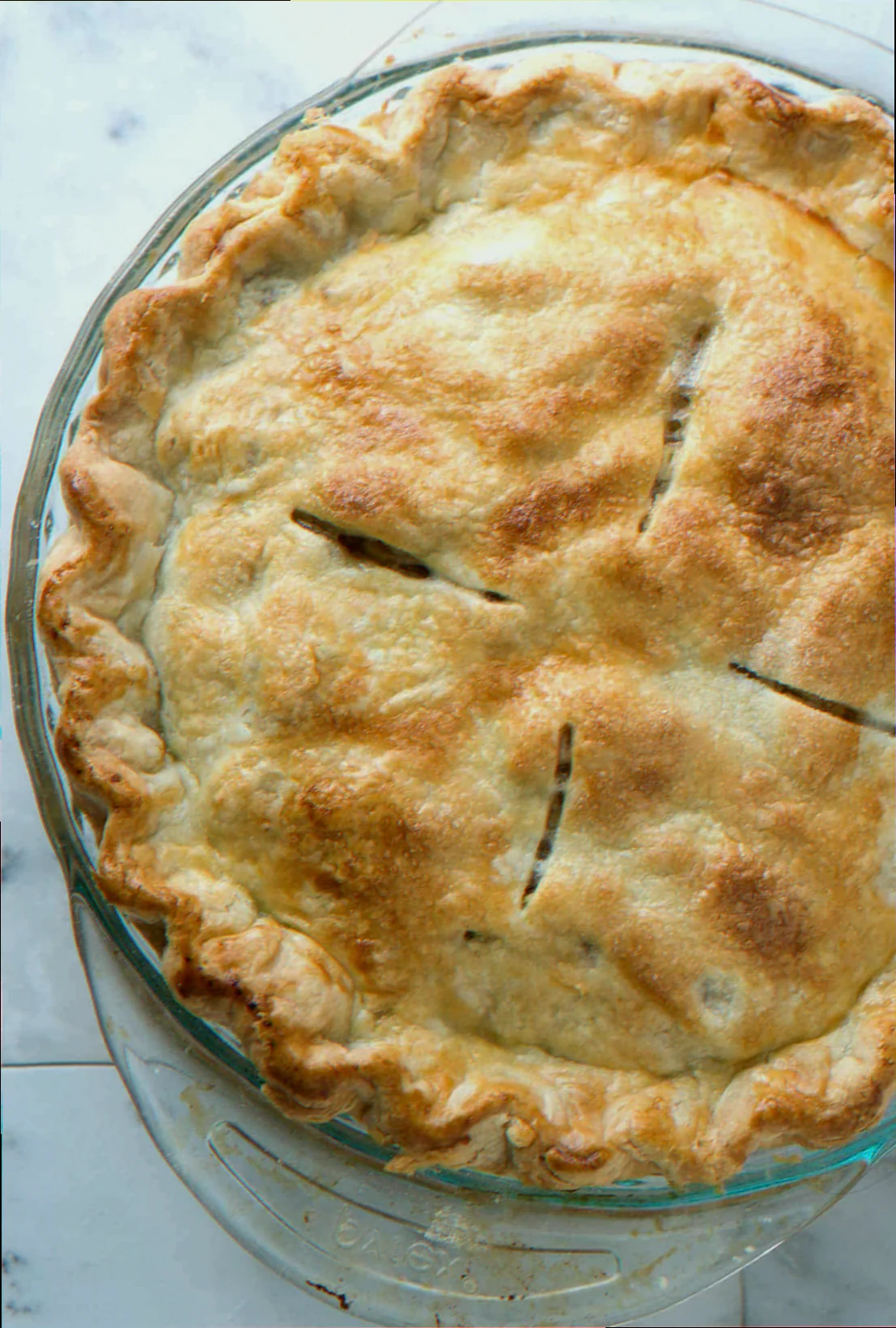
A thin shawl of woodsmoke curled from a hearth in a cramped, wattle-and-daub cottage, its scent mingling with the crisp, early autumn air of rural England. Outside, the boughs of an ancient apple tree, heavy with fruit, bowed towards the earth. Inside, Agnes, her knuckles gnarled by years of labour, pressed a disc of pale, tender dough into a rough earthenware dish. This was not merely food; it was a sacrament of harvest, a bulwark against the encroaching chill, the humble yet profound apple pie crust, a shield for the sweet, spiced bounty of the season.
Where Apple Pie Crust Comes From — and Why It Was Invented
The story of apple pie crust is not one of a single grand invention, but a slow, evolutionary unfolding, deeply rooted in the practicalities of survival and the advent of staple crops in the British Isles. Its genesis lies not in a desire for dessert, but in the fundamental need for preservation and portable sustenance. Long before sugar was a common commodity and ovens were anything more than rudimentary hearths, the concept of a “pie” was a far cry from the golden-crusted confection we know today.
The true ancestors of apple pie crust emerged in the Middle Ages, primarily in Northern Europe. Think of it less as a pastry meant to be savoured for its own delicate flavour, and more as a robust, edible container. In regions like England and France, where grains like wheat and rye were cultivated, and where fruit trees were common, the idea of encasing fillings in dough offered a dual benefit. Firstly, it protected the filling from ash and debris when baked directly on hot embers or in primitive ovens. Secondly, it acted as a preservative, shielding the cooked contents from spoilage during travel or between meals. These early “pies” were often savoury, filled with meats, vegetables, or even less palatable ingredients, the crust serving as a protective, if often inedible, shell – a sort of proto-tupperware.
The specific geography and climate of Britain played a crucial role. The temperate, maritime climate allowed for the successful cultivation of apples, particularly hardy varieties that could withstand the cool seasons. Wheat, though perhaps not as universally abundant as in more southern climes, was sufficiently established by the medieval period to form the basis of a workable dough. The availability of animal fats – lard from pigs, butter from dairy cows – provided the necessary richness and flakiness that would, over centuries, come to define the ideal pie crust. The absence of readily available, affordable sugar meant that the filling’s sweetness was largely derived from the fruit itself, a subtle natural sweetness that the crust needed to complement, not overpower.
The Ingredients as Historical Artefacts
The ingredients that form the bedrock of a classic apple pie crust are each a testament to centuries of agricultural development, trade, and culinary adaptation.
Wheat Flour: The ubiquitous foundation. Wheat’s journey to the British Isles is an ancient one, dating back to the Neolithic period. Its cultivation spread across Europe with early agriculturalists. By the medieval era, wheat was a significant grain, though often milled coarsely. The development of finer milling techniques in later centuries, particularly the refinement of white flour, was crucial for achieving the tender, flaky texture associated with superior pie crusts. The switch from wholemeal or coarsely ground flour to refined white flour was a significant shift, driven by a desire for a more delicate mouthfeel and a paler, more aesthetically pleasing crust.
Animal Fat (Lard or Butter): This is the secret to flakiness. Lard, rendered from pork fat, was historically abundant and readily available in many European households, particularly in rural settings where pigs were common. It has a high melting point, which allows it to create distinct layers in the dough. Butter, derived from dairy, offered a richer flavour profile. The choice between lard and butter often reflected regional availability and economic status. In early iterations, lard might have been more common for its efficacy and lower cost. The introduction and increasing accessibility of butter allowed for a more nuanced flavour. Modern recipes often favour butter for its taste, but many purists argue that a blend of butter and lard, or even pure lard, achieves a superior, more traditional flakiness.
Water (or sometimes Milk): The binder. Cold water is essential for preventing the gluten in the flour from developing too much, which would result in a tough crust. Its role is purely functional – to hydrate the flour and fat, bringing the dough together. The use of ice-cold water is a modern understanding of gluten development, but the principle of using minimal liquid to create a tender dough has ancient roots. Occasionally, milk might have been used, adding a touch of richness and browning capability, but water remained the most fundamental and accessible binder.
Harvest Festivals and Hearthside Comfort — When and Why This Dish Is Made
The transformation of the pie crust from a mere casing to a cherished component of a celebratory dish is inextricably linked to the evolution of baking technology and the growing availability of sugar. While early “pies” were functional, the apple pie as we recognise it began to emerge more prominently in the 16th and 17th centuries, coinciding with increased trade and the wider dissemination of recipes.
The apple pie, in particular, became deeply embedded in the fabric of autumnal celebrations and domestic rituals in Britain and later in its colonies. Its appearance signalled the culmination of the harvest. Apples, readily available and stored through the winter, represented abundance and the bounty of the land. The pie crust, now made with finer flour and sweetened fillings, became a vehicle for this celebration. It was baked for harvest festivals, Thanksgiving dinners (in its American iteration), and as a comforting centrepiece for family gatherings during the colder months.
The act of making apple pie was often a communal or familial affair. The preparation of the crust, with its precise mixing and rolling, could be a teaching moment for younger generations. The aroma of baking apples and spices filling the home was a signal of warmth, security, and shared anticipation. It was a dish that spoke of home, of tradition, and of a connection to the agricultural cycle.
How Migration and Empire Changed Apple Pie Crust Forever
The journey of apple pie crust beyond its British origins is a powerful narrative of cultural diffusion, adaptation, and reinvention, primarily driven by British migration and colonial expansion.
When British settlers arrived in North America, they brought their culinary traditions, including the fundamental concept of the pie. However, the New World presented both challenges and opportunities. The abundance of apples, particularly native varieties and those introduced by colonists, meant that apple pies could flourish. Yet, ingredients were not always identical. While lard and butter were available, the specific quality and types might differ. More significantly, the availability and affordability of sugar underwent a dramatic transformation.
In Britain, refined sugar remained a luxury for much of the period when apple pie was gaining popularity. In the colonies, particularly with the advent of sugar plantations in the Caribbean and later the expansion of sugar production, it became more accessible. This shift led to a sweeter filling, which in turn influenced the crust. A sweeter filling could accommodate a slightly less rich crust, or conversely, a richer crust could be employed to balance the heightened sweetness.
The “American Apple Pie” as it is often conceived today is a product of this New World evolution. The crust often became thinner, crisper, and perhaps less robustly flavoured than its historical British counterpart, as the emphasis shifted to the sweet, spiced apple filling. The use of all-butter crusts became more prevalent, prized for its flavour. Furthermore, the sheer volume of apple pies baked in America, from farmhouse kitchens to bustling bakeries, cemented its status as an iconic dish, often far eclipsing its recognition in its country of origin. This migration wasn’t just about recipes; it was about how a simple concept of encased food transformed into a symbol of national identity and domestic comfort.
How to Make Apple Pie Crust — The Recipe in Full
This recipe aims to capture the essence of a traditional, tender yet flaky crust, mindful of its historical context and the importance of cold ingredients and minimal handling.
| Ingredient | Quantity | Why it’s here |
|---|---|---|
| All-purpose Wheat Flour | 315 grams | The foundational grain, providing structure. Refined white flour for a tender texture. |
| Cold Unsalted Butter, cubed | 170 grams | For richness and flakiness. Its high fat content creates steam pockets. |
| Cold Lard (or additional butter), cubed | 85 grams | Contributes to superior flakiness due to its higher melting point and texture. |
| Ice Water | 80-120 ml (approx.) | The essential binder. Ice-cold water prevents gluten development, ensuring tenderness. The exact amount varies with humidity. |
| Fine Sea Salt | 5 grams | Enhances flavour and balances sweetness, a critical component even in early iterations. |
Method:
Begin by preparing your pastry station: ensure your butter and lard are thoroughly chilled, cut into small cubes. Place your flour and salt in a large, chilled mixing bowl and whisk to combine. This ensures even distribution of salt and aeration of the flour.
Introduce the cold, cubed fats to the flour. Using your fingertips, a pastry blender, or a food processor on a pulse setting, begin to cut the fat into the flour. The goal is to achieve a coarse meal consistency with some larger, pea-sized pieces of fat still visible. These larger pieces are crucial; they will melt during baking, creating steam and separating the dough into flaky layers. Work quickly to prevent the fat from warming.
Gradually add the ice water, one tablespoon at a time, while gently mixing with a fork or your fingertips. Mix only until the dough just begins to come together. Avoid overmixing, which will develop gluten and result in a tough crust. You should still see some dry bits.
Turn the dough out onto a lightly floured surface. Gently bring the dough together with your hands, forming it into a cohesive mass. Do not knead. Divide the dough in half, flatten each half into a disc approximately 2 cm thick, wrap tightly in plastic wrap, and refrigerate for at least 1 hour, or preferably 2 hours. This chilling period allows the gluten to relax and the fat to firm up, which is essential for a tender and flaky crust.
When ready to assemble your pie, allow one disc of dough to sit at room temperature for about 10-15 minutes if it feels too stiff to roll. On a lightly floured surface, roll out one disc of dough to a circle about 30 cm in diameter and approximately 3 mm thick. Carefully transfer this to your pie dish, pressing it gently into the bottom and up the sides. Trim any excess dough, leaving a slight overhang.
Fill with your prepared apple filling, then roll out the second disc of dough. You can place this over the top as a full lid, cut vents, or create a lattice top. Crimp the edges of the top and bottom crusts together to seal. For a golden finish, you may brush the top with a beaten egg wash (optional, but a modern enhancement for appearance).
Bake in a preheated oven at 200°C for 20 minutes, then reduce the temperature to 175°C and bake for an additional 30-40 minutes, or until the crust is golden brown and the filling is bubbling. Allow to cool slightly before serving.
The Tension — What Authenticity Actually Means for This Dish
The notion of “authentic” apple pie crust is a particularly loaded one, often sparking fervent debate. At its core, the tension lies between the historical reality of its humble origins and the romanticized, often idealized version that has become a cultural icon.
Purists might insist on a crust made with a significant proportion of lard, arguing that only lard can achieve the truly light, shatteringly crisp, and layered texture of historical pies. They might also advocate for a less hydrated dough, emphasizing the “short” and crumbly nature of older pastries. The exclusion of any sugar in the crust itself is also a hallmark of historical accuracy, as sugar was a luxury.
However, to dismiss modern adaptations is to ignore the evolution of ingredients and palates. The widespread availability of high-quality butter has made all-butter crusts a popular choice for their superior flavour. Modern bakers have also refined techniques, understanding the precise role of gluten development and fat distribution to achieve excellent results with butter alone. The use of a touch of sugar in the crust, while not historically authentic, can enhance browning and add a subtle counterpoint to the filling. Similarly, the inclusion of a small amount of vinegar or lemon juice in the water, a modern trick, can further tenderize the dough by inhibiting gluten development.
Authenticity, therefore, becomes a complex interplay. Is it about replicating the exact ingredients and methods of a 17th-century baker, or is it about capturing the spirit of the dish – its comforting nature, its celebration of seasonal bounty, and its capacity to evoke a sense of home? The “tension” is less about gatekeeping a single perfect recipe and more about understanding the trade-offs made along its historical journey. What is lost in flavour by using only lard? What is gained in texture by adhering strictly to historical methods?
What Apple Pie Crust Has Become — and What That Tells Us
Today, apple pie crust is a global phenomenon, a symbol of comfort food and a canvas for endless culinary creativity. It has transcended its British roots to become an archetypal dessert, most famously associated with American culture, where it is often hailed as “as American as apple pie.”
In contemporary cooking, the apple pie crust exists in myriad forms. It’s found in artisanal bakeries using heirloom apples and artisanal butters, in home kitchens where families pass down cherished recipes, and in vast commercial operations that produce millions of pies annually. It has been elevated in fine dining, with chefs experimenting with intricate lattice designs, infused crusts (e.g., cardamom, ginger), and innovative flavour pairings. Conversely, it remains a staple in the most humble of settings, a testament to its enduring accessibility.
Its global popularity tells us about the power of simple, satisfying flavour combinations and the universal appeal of comforting food. It speaks to the ease with which culinary traditions can travel and adapt, becoming reinterpreted in new contexts. The apple pie crust’s journey from a utilitarian casing to a beloved dessert is a micro-history of food culture itself – a story of agriculture, trade, migration, and the ever-present human desire to create something delicious and meaningful from the earth’s bounty.
Questions About Apple Pie Crust
What is the single ingredient you should never substitute in apple pie crust?
While debates rage, the ice-cold water is arguably the most critical element for achieving a tender and flaky crust. Its temperature is paramount for controlling gluten development and keeping the fat solid. Substituting warm water guarantees a tough, dense crust, fundamentally altering the texture that defines a good pie crust.
How does apple pie crust differ between England and the United States?
Historically, English apple pie crust tends to be richer and perhaps a bit denser, often incorporating a higher proportion of lard for ultimate flakiness and a more savoury character. The fillings were typically less sweet. American apple pie crust, particularly the iconic version, often leans towards an all-butter crust for flavour, a thinner and crisper texture, and a bolder, sweeter, and more heavily spiced apple filling. The American crust often serves as a more delicate counterpoint to a more assertive filling.
Related topics: Littice pie crust recipe · Pie crust recipe com · Apple cinnamon pie recipe brown sugar
Is there a version of apple pie crust that is accessible to make at home without special equipment?
Absolutely. The most basic version can be made with just your hands, a bowl, and a rolling pin. The key is using very cold ingredients (butter, lard, and water) and minimal handling. You can “cut” the fat into the flour by rubbing it between your fingertips until it resembles coarse breadcrumbs. Instead of a food processor, a sturdy fork can be used to incorporate the water. A rolling pin is useful, but a clean, sturdy bottle (like a wine bottle) can be used in a pinch. The most important aspect is patience with chilling the dough, which is crucial for texture regardless of equipment.