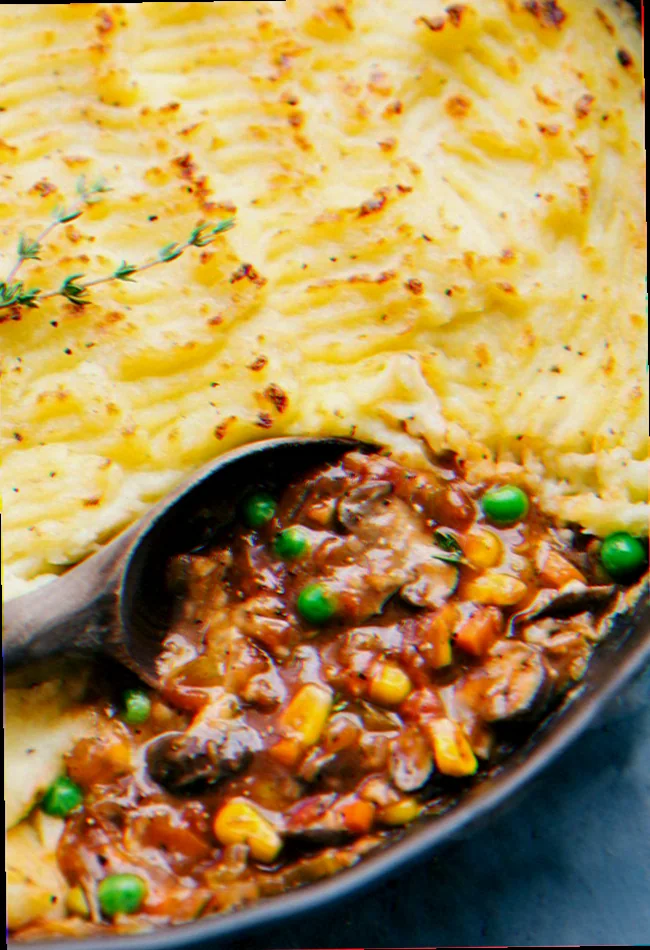
The first time I made Shepherds Pie vegetarian recipe, it was a disaster. Not a quiet, forgettable disaster, but a loud, splattery, fundamentally wrong disaster. The filling was a mushy, grey landscape, and the potato topping? A gluey, pasty mess that slid off the fork like a defeated mime. I’d followed a recipe that promised a hearty, comforting meal, and what I got was a culinary shrug. It took me years, countless bowls of disappointment, and one epiphany – the revelation that deep, slow caramelization of the vegetables is the secret weapon – to finally nail it.
Why Most Versions of Shepherds Pie Vegetarian Recipe Fail
The biggest culprit, the one that sends so many home cooks down the road to blandness, is the rushed sauté. People treat the vegetables like they’re just a quick prelude to the main event. They toss in onions, carrots, and celery, maybe give them a stir for five minutes, and then drown them in liquid. What you end up with is a watery, one-note filling. The vegetables, instead of developing that rich, savoury sweetness that comes from slow cooking, remain sharp and watery. They don’t meld; they just… sit there, doing their best impression of edible wallpaper paste. The texture is either too soft and mushy from being boiled in their own steam, or stubbornly al dente, fighting the fork. It lacks the deep, umami backbone that makes a truly satisfying pie. It’s the difference between a comforting hug and a polite handshake.
The Ingredients That Actually Matter
Forget bland supermarket mushrooms. For my filling, I’m all about a generous amount of chestnut mushrooms, about 400g of them, finely diced. They’re meaty and hold their shape, providing a crucial textural element that mimics the bite of mince without being gummy. Then there are carrots, about 200g, also finely diced. I used to just chuck them in, but now I understand their true power lies in their sweetness, which only emerges when they’ve had time to truly soften and caramelize. The real unsung hero, though, is celery, around 150g, finely diced. It’s the aromatic foundation, adding a subtle savoury depth that you can’t quite put your finger on, but you’d absolutely miss if it wasn’t there. For the liquid, I swear by vegetable stock, about 500ml, but not just any stock. I use a good quality, deeply flavoured one, often a mushroom-based stock for extra oomph. And for that essential richness, tomato paste is non-negotiable – about 2 tablespoons, concentrated and dark. I’ve tried the cheap stuff, and it just tastes tinny; good quality tomato paste adds that crucial depth. Finally, the potatoes for the topping: King Edward or Maris Piper potatoes are my absolute favourites, around 1kg. They have the right starch content to create a fluffy, creamy mash that browns beautifully.
The Moment Everything Changes: Deep, Slow Caramelization
The single insight that transformed my Shepherds Pie vegetarian recipe from a sad imitation to a comforting masterpiece was understanding deep, slow caramelization of the vegetables. It sounds simple, but it’s the difference between a quick simmer and a slow build of flavour. Before I learned this, I was just softening my veg. Now, I’m coaxing out their inherent sugars. I learned this by watching my grandmother, who never followed a recipe and would just stare into her pans, patiently stirring. She wasn’t just cooking; she was developing. When you sauté your onions, carrots, and celery on medium-low heat for a good 20-30 minutes, stirring frequently, you’re not just softening them. You’re allowing the natural sugars to break down and brown. This creates a complex, sweet, and savoury foundation that no amount of stock cubes can replicate. It’s alchemy. Without it, your filling is just a collection of cooked vegetables. With it, it sings.
How I Actually Make It Now — Step by Step
Building the Base: I start by heating about 2 tablespoons of olive oil in a large, heavy-bottomed pan or Dutch oven over medium heat. I add my finely diced onions (about 2 medium ones), carrots (200g), and celery (150g). Then, I turn the heat down to medium-low and I let them do their thing. No rushing. I’m looking for them to soften and become translucent, then start to take on a lovely golden-brown hue. This takes at least 20 minutes, probably closer to 30 if I’m being honest. I stir them every few minutes to ensure even cooking and to stop them from sticking. If they start to catch too much, I add a tiny splash of water and scrape the bottom of the pan.
Deepening the Flavour: Once the vegetables are beautifully softened and starting to caramelize, I add the finely diced chestnut mushrooms (400g). I turn the heat up slightly to medium, and I let these cook down, stirring occasionally. The mushrooms will release a lot of water. My job is to let that water evaporate and then, crucially, to allow the mushrooms to start browning nicely. This is another 10-15 minutes. You’ll see them shrink and turn a deep, rich brown. Now, I stir in the tomato paste (2 tablespoons) and cook it for a minute or two, stirring constantly, until it darkens slightly and smells toasty. This toasts the paste and removes any raw, tinny flavour.
Creating the Richness: Now for the liquid. I pour in about 500ml of good quality vegetable stock. I also add a tablespoon of soy sauce (or tamari for gluten-free) for an extra hit of umami, and a good pinch of dried thyme. I scrape the bottom of the pan again to get all those lovely browned bits up into the sauce. I bring it to a simmer, then reduce the heat to low, cover the pan, and let it bubble away gently for at least 30 minutes, or even longer. The longer it simmers, the more the flavours meld and deepen. I check it every so often, giving it a stir, and if it looks too dry, I add a splash more stock. The goal is a thick, rich, deeply savoury filling, not a watery soup.
The Perfect Potato Crown: While the filling simmers, I get my potatoes ready. I peel about 1kg of King Edward or Maris Piper potatoes, cut them into even chunks, and put them in a pot of cold, salted water. I bring them to a boil and cook until they’re fork-tender, about 15-20 minutes. I drain them thoroughly in a colander, then put the colander back over the empty pot on the warm stove for a minute or two. This dries them out beautifully, which is key to a fluffy mash. I then mash them with a potato masher – I don’t like using a food processor; it makes them gluey. I add about 75g of unsalted butter (or a good quality vegan butter) and about 100ml of warm milk (or unsweetened plant milk). I season generously with salt and white pepper. I stir it until it’s smooth and creamy, but I don’t overwork it.
Assembly and Golden Finish: I preheat my oven to 200°C (180°C fan/Gas Mark 6). I spoon the rich, thick filling into an ovenproof dish, about 20cm x 25cm. Then, I dollop the mashed potato over the top. I use a fork to create ridges across the surface. These ridges will catch the heat and brown beautifully, giving you lovely crispy bits. I then carefully place the dish on a baking tray (to catch any potential spills) and bake for 25-30 minutes, until the topping is golden brown and the filling is bubbling merrily around the edges.
The Failures I Still See — and How to Fix Them
- Watery Filling: This is the classic symptom of rushing the vegetable sauté. You haven’t evaporated enough of the moisture from the mushrooms and other vegetables. The fix is simple: be patient. Cook down those mushrooms until they’re deeply browned, and let any liquid that releases cook off completely before adding your stock.
- Gluey Mash: This usually happens when you overwork the potatoes or don’t dry them out enough after boiling. I learned this the hard way with a food processor – never again. The fix is to mash them by hand, and to ensure they are thoroughly dried on the stovetop before adding butter and milk.
- Blandness: This is the ghost that haunts vegetarian cooking. The fix, for me, is layering in umami. Beyond the slow-cooked veg, I always add a splash of soy sauce or tamari, and sometimes a teaspoon of Marmite (if I’m feeling brave and know no one is sensitive!). It’s a secret weapon for depth that doesn’t make it taste “yeasty.”
When I Make This and What I Serve It With
Shepherds Pie vegetarian recipe is my ultimate Sunday supper. It’s the dish I make when the weather turns chilly, when I want something deeply comforting and nurturing, and when I have a bit of time to dedicate to its slow, steady creation. It’s also my go-to for feeding friends who are skeptical about vegetarian food – it converts them every time. I usually serve it with a big, vibrant green salad dressed with a sharp vinaigrette to cut through the richness of the pie. Alongside that, I’ll often make some steamed green beans with a knob of butter, or some simple roast parsnips. For drinks, a robust medium-bodied red wine like a Merlot or a Chianti always pairs beautifully, or a good quality craft ale.
Substitutions I’ve Tested Honestly
- Mushrooms → Lentils: I’ve tried using brown or green lentils instead of mushrooms. They provide a nice bite and protein, but they lack the inherent earthiness and textural variation of mushrooms. It’s a decent substitute if you absolutely must, but it doesn’t quite hit the same notes for me. It’s acceptable if you’re really wanting that “mince” feel, but I prefer mushrooms.
- Carrots → Parsnips: Parsnips can add a lovely sweetness, but they can also be a bit overpowering if not balanced carefully. I’ve found parsnips can make the filling a bit too sweet if I use too much. Stick to carrots for the classic flavour.
- Dairy-free/Vegan: This works brilliantly. I use a good quality vegan butter (like Violife or Naturli) for the mash and a good unsweetened plant milk, like oat or soy. For the stock, ensure it’s vegan. I’ve made it entirely vegan dozens of times, and honestly, you’d be hard-pressed to tell the difference.
Questions I Get Asked About Shepherds Pie Vegetarian Recipe
“Do I really need to caramelize the vegetables for that long?”
Yes, you absolutely do. Look, I know it sounds like a faff. But that slow, patient cooking is where the magic happens. If you skip it, you’re essentially making a vegetable stew and putting mash on top. It’s the difference between a good meal and a truly memorable one. Trust me, the flavour payoff is immense.
“Can I use different vegetables?”
You can, but be mindful of their water content and flavour profiles. Root vegetables like swede or parsnips can work, but balance their sweetness. Peas are a classic addition that I usually stir in towards the end of the simmering process. Avoid watery vegetables like courgettes, as they’ll just make the filling too wet.
Related topics: Chickpea pie recipe vegetarian · Apple cinnamon pie recipe brown sugar · Lepiphanie pie recipe
“My mash is always a bit watery. What am I doing wrong?”
This is the one that used to drive me mad! The key, I’ve found, is drying the potatoes out completely. After draining them, put them back in the sieve over the hot pan for a good couple of minutes, shaking them around. Get rid of as much steam as possible before you add any butter or milk. And don’t boil them to death – just until they’re fork-tender.