Chocolate Pie Diagnostic Guide
The most common catastrophe for a simple chocolate pie is a soggy bottom crust, leaving you with a flabby, undercooked base that tastes of disappointment. This article will guide you through every potential pitfall, from ingredient selection to final serving, ensuring your next attempt is a triumph.
What Perfect Chocolate Pie Actually Looks, Feels, and Tastes Like
| Stage | Success marker — what you should see / feel / smell / hear |
|---|---|
| Before cooking | The filling is a glossy, rich, dark brown liquid, thick enough to coat the back of a spoon. The crust dough is firm but pliable, smelling faintly of butter and flour. |
| During cooking | The filling will gently bubble around the edges, signalling it’s starting to set, at around 80-85°C internal temperature if using a thermometer. The crust will be a deep golden brown. |
| At the finish | Once cooled, the filling will have a firm, yet yielding texture. It should jiggle slightly but not slosh. A clean knife inserted will come out mostly clean, with perhaps a few moist crumbs. |
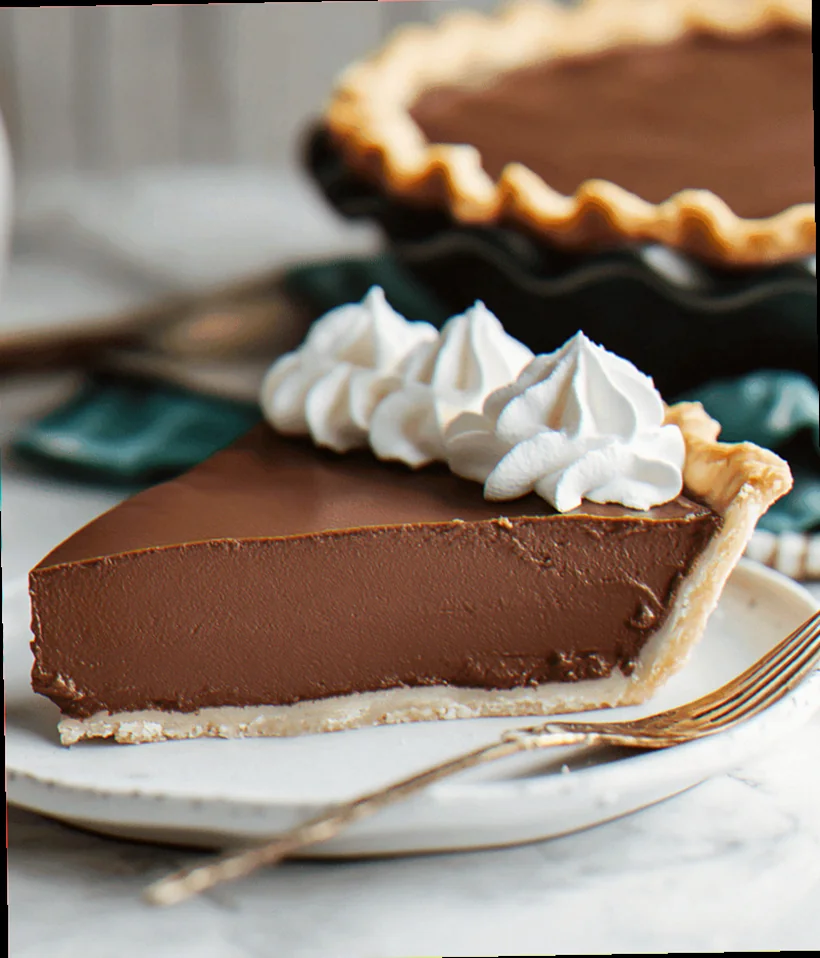
| When serving | The pie slices cleanly, revealing a smooth, dark, fudge-like interior. The aroma is intensely chocolatey. The texture is creamy, melting, and utterly decadent. |
The Ingredient Failures — Wrong Choices Before You Even Start Cooking
- Soggy Bottom Crust: caused by using butter that is too soft or melted in the pastry dough, preventing proper gluten development and fat layering. → fix: Use unsalted butter, chilled to 1°C, cut into 1cm cubes.
- Gritty Filling: caused by using granulated sugar instead of confectioners’ sugar for thickening. Granulated sugar’s larger crystals don’t dissolve as readily, leaving a sandy texture. → fix: Use confectioners’ sugar (icing sugar) only.
- Dull Chocolate Flavour: caused by using low-quality cocoa powder, which often has a weak, one-dimensional flavour. → fix: Use Dutch-processed cocoa powder of good quality (e.g., Valrhona, Ghirardelli).
- Overly Sweet or Flat Flavour: caused by omitting salt or using table salt too liberally. Salt enhances chocolate flavour and balances sweetness. → fix: Use 1/4 teaspoon of fine sea salt.
The Technique Failures — What Goes Wrong During Cooking
- Soggy Bottom Crust: symptom: The bottom crust is pale, soft, and damp, even after baking. → caused by: Blind baking the crust insufficiently or not using a preheated oven. → fix: Blind bake the crust at 190°C for 15 minutes, then remove weights and bake for another 5-10 minutes until golden brown.
- Seized Chocolate Filling: symptom: The chocolate filling becomes grainy, stiff, and unpourable, like lumpy mud. → caused by: Adding liquids too quickly to melted chocolate or overheating the chocolate, causing the cocoa solids to clump together. → fix: Melt chocolate gently over a double boiler or in short microwave bursts (30 seconds at a time), stirring until smooth. Then, gradually whisk in warm liquids.
- Split Filling (Oily Top): symptom: The filling separates, with a layer of oil on top and a watery base. → caused by: Overheating the filling during cooking or not emulsifying the ingredients properly. → fix: Whisk constantly over low to medium heat. If it starts to look oily, remove from heat and whisk vigorously until it comes back together. Alternatively, add a tablespoon of cold water or milk while whisking off the heat.
- Rubbery Texture: symptom: The filling is tough, chewy, and rubbery, not smooth and creamy. → caused by: Overcooking the filling after it has thickened, which can toughen egg proteins (if used) or over-thicken cornstarch. → fix: Cook only until the filling coats the back of a spoon and a slight jiggle remains. Do not boil vigorously.
- Cracked Surface: symptom: The filling develops cracks as it cools. → caused by: Cooling too rapidly or overcooking. → fix: Allow the pie to cool gradually on a wire rack at room temperature before refrigerating.
The Equipment Failures — When Your Tools Are the Problem
- Uneven Baking: what the wrong version causes + what to use instead + why it matters. A thin, dark metal pie plate can lead to a burnt bottom crust, while a glass pie plate allows you to monitor browning more effectively, preventing the soggy bottom.
- Inaccurate Temperature: the failure it produces + the fix + the workaround if unavailable. Using an oven thermometer is crucial. Ovens can be notoriously inaccurate, leading to under or overcooking. If you don’t have one, rely on visual cues and adjust cooking time based on your oven’s known tendencies.
- Lumpy Filling: why this specific tool exists for this dish + acceptable substitute. A whisk is essential for creating a smooth, emulsified filling. A rubber spatula can be used to scrape the bowl, but a whisk is key for incorporating ingredients evenly and preventing lumps.
The Full Recipe — Built Around Preventing Every Failure Above
- 1 1/4 cups (150g) all-purpose flour — prevents over-tough crust; using too much flour can make the crust dry and difficult to handle.
- 1/2 teaspoon fine sea salt — enhances chocolate flavour and balances sweetness.
- 1/2 cup (113g) cold unsalted butter, cut into 1cm cubes — ensures a flaky crust by creating steam pockets during baking.
- 3-5 tablespoons ice water — binds the dough without overworking gluten.
- 4 ounces (113g) bittersweet or semi-sweet chocolate (60-70% cocoa solids), finely chopped — use good quality chocolate for a rich flavour.
- 1 1/2 cups (360ml) whole milk — provides richness and helps emulsify the filling.
- 3/4 cup (90g) confectioners’ sugar — dissolves easily for a smooth, grit-free filling.
- 1/4 cup (30g) Dutch-processed cocoa powder — for deep chocolate flavour and colour.
- 3 large egg yolks — adds richness and helps bind the filling.
- 1 teaspoon vanilla extract — rounds out the chocolate flavour.
Method:
- Make the Crust: In a large bowl, whisk together the flour and salt. Cut in the cold butter using a pastry blender or your fingertips until the mixture resembles coarse crumbs with some pea-sized pieces of butter. Gradually add ice water, 1 tablespoon at a time, mixing until the dough just comes together. Do not overmix. Flatten into a disc, wrap in plastic wrap, and refrigerate for at least 30 minutes. This chilling prevents the butter from melting too soon, which is key to a flaky crust.
- Roll and Blind Bake: Preheat oven to 190°C. On a lightly floured surface, roll out the dough into a 12-inch circle. Carefully transfer to a 9-inch pie plate. Trim and crimp the edges. Line the crust with parchment paper and fill with pie weights or dried beans. Bake for 15 minutes. This initial blind bake at high heat helps set the crust and prevent a soggy bottom. Remove parchment and weights, and bake for another 5-10 minutes, or until lightly golden. This second stage ensures the bottom is cooked through.
- Prepare the Filling: While the crust bakes, place the chopped chocolate in a heatproof bowl. In a medium saucepan, whisk together milk, confectioners’ sugar, and cocoa powder until smooth. Heat over medium heat, stirring constantly, until it just begins to simmer around the edges. This gradual heating prevents the cocoa from clumping and the sugar from settling.
- Temper the Egg Yolks: In a separate small bowl, whisk the egg yolks. Slowly ladle about 1/2 cup of the hot milk mixture into the yolks, whisking constantly. This tempering process gently warms the yolks, preventing them from scrambling when added to the hot liquid.
- Combine and Cook: Pour the tempered yolk mixture back into the saucepan with the remaining milk mixture. Return to medium-low heat. Cook, stirring constantly with a whisk, until the filling thickens enough to coat the back of a spoon, about 5-8 minutes. Do not boil. This is a critical control point where overcooking can lead to a rubbery texture. The filling should reach approximately 80°C. Stir in the chopped chocolate and vanilla extract, whisking until smooth and glossy. This step ensures the chocolate melts evenly into the hot base.
- Fill and Chill: Pour the hot filling into the pre-baked pie crust. The glossy, rich brown colour indicates proper emulsification. Tap the pie plate gently on the counter to settle the filling and release any air bubbles. Let the pie cool completely on a wire rack at room temperature for at least 2 hours. This gradual cooling prevents a cracked surface. Once cooled, refrigerate for at least 4 hours, or until fully set.
How to Rescue Chocolate Pie When It Has Already Gone Wrong
- If a Soggy Bottom Crust has happened: This is difficult to fully rescue. If it’s only slightly soft, you can try placing the pie under a broiler for 1-2 minutes (watch very carefully!) to crisp the bottom. If it’s significantly soggy, you may have to accept it or scrape the filling out and serve it as a chocolate pudding with a separate, freshly baked crust.
- If the Filling has Seized: If the chocolate filling is lumpy and stiff, try whisking in a tablespoon or two of warm milk or cream off the heat. This may help re-emulsify it. It might not be perfectly smooth, but it can be salvaged.
- If the Filling has Split: If you see oil on top, remove the pie from the heat and whisk vigorously. You can also try whisking in a tablespoon of cold water or milk. This often helps it come back together into a smooth emulsion.
- If the Filling is Rubbery: Unfortunately, a rubbery filling cannot be un-rubbery. The proteins are overcooked. Your best bet is to serve it as is and make a note for next time to cook for less time.
- If the Surface is Cracked: If the crack is minor, it’s purely aesthetic and won’t affect taste. You can cover it with whipped cream or chocolate shavings. If the crack is deep, it means the filling may be overcooked and slightly dry.
Make-Ahead: Which Failures This Introduces and How to Avoid Them
Making chocolate pie ahead can introduce texture changes. The primary failure is a softening crust if made too far in advance.
- Failure: Softening Crust.
- Cause: Moisture migrating from the filling into the crust over time.
- Fix: Bake the crust and cool it completely, then store it separately in an airtight container at room temperature for up to 1 day. Prepare the filling up to the point of pouring into the crust, and assemble just before chilling. If assembling fully, chill for no more than 24 hours. Ensure the pie is well-covered in the refrigerator to prevent absorbing odours.
Related topics: Pc chocolate chip cookie pie recipe · Bing cherry pie filling recipe canning · Pudding bottom peach pie recipe
Diagnostic FAQ — Real Failures, Real Fixes
My chocolate pie turned out watery and unset — what went wrong?
This is a failure to set. It was likely caused by undercooking the filling, meaning it didn’t reach the necessary temperature (around 80°C) to thicken properly. For next time, ensure you cook until the filling coats the back of a spoon and has a slight jiggle, not completely solid.
It looked right but tasted bland and pasty — where did I go wrong?
This points to flavour deficiency and gritty texture. You likely used low-quality cocoa powder or granulated sugar instead of confectioners’ sugar for thickening. For your next attempt, invest in good Dutch-processed cocoa and always use confectioners’ sugar.
Everything looked perfect until I cut into it, and the bottom was raw — why did it fail?
This is a classic soggy bottom crust. The most common cause is insufficient blind baking. Ensure you are preheating your oven correctly and baking the crust until it is visibly golden brown before adding the filling.