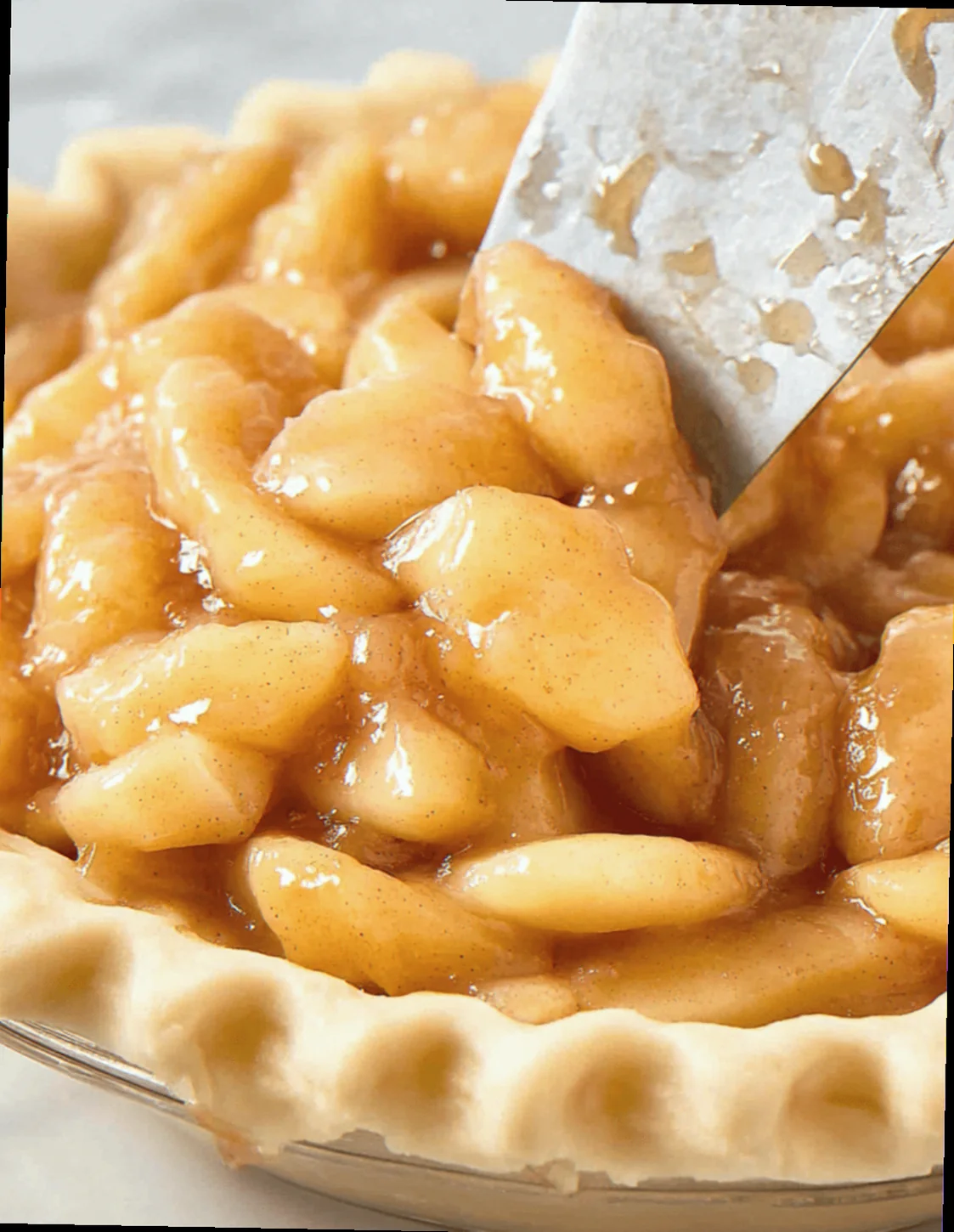
The most common disaster with soft apple pie filling is a waterlogged crust, a soggy, unpleasant foundation that undermines the entire dessert. This happens when the filling releases too much liquid, making the bottom crust limp and pale instead of crisp and golden. This guide will dissect every potential pitfall in creating perfect soft apple pie filling and provide precise solutions.
What Perfect Soft Apple Pie Filling Actually Looks, Feels, and Tastes Like
| Stage | Success marker — what you should see / feel / smell / hear |
|---|---|
| Before cooking | Uniformly sliced apples, slightly translucent edges, glistening with sugar and spices. A sweet, slightly tart aroma of fresh apples and cinnamon. |
| During cooking | Bubbling gently at 90°C, the liquid thickening to a syrupy consistency that coats the back of a spoon. The aroma intensifies, becoming warm and comforting. |
| At the finish | The apples are tender but hold their shape, suspended in a thick, glossy sauce that does not pool at the bottom. When cooled, it will have a slight wobble, not be liquid. |
| When serving | A rich, amber-coloured filling, fragrant with baked apple and spice. The texture is yielding, tender apples with a smooth, slightly chewy sauce. The flavour is a balanced sweetness and tartness, with a lingering warmth of cinnamon. |
The Ingredient Failures — Wrong Choices Before You Even Start Cooking
- Waterlogged Crust: caused by using low-pectin, overly ripe apples that release excessive moisture.
- Fix: Use a mix of firm, tart apples like Granny Smith, Honeycrisp, or Braeburn. Avoid Red Delicious or Gala, which are too soft and sweet. Aim for about 1.2 kg total.
- Gritty Filling: caused by using granulated sugar that doesn’t fully dissolve.
- Fix: Use superfine granulated sugar (caster sugar) or a mix of granulated and light brown sugar for better dissolution.
- Dull Spice Flavour: caused by stale ground cinnamon or nutmeg.
- Fix: Use fresh, fragrant ground cinnamon (2 tsp) and freshly grated nutmeg (1/4 tsp). Check expiry dates or smell for potency.
The Technique Failures — What Goes Wrong During Cooking
- Watery Filling: what it looks like – a thin, watery sauce with apples swimming in it.
- caused by insufficient thickener or over-reliance on apple moisture.
- fix: Add 2-3 tablespoons of cornstarch or tapioca starch, whisked with a little of the apple juice to form a slurry before adding to the main mixture. Cook until the mixture thickens significantly, reaching a temperature of 95°C.
- Tough, Uncooked Apples: Symptom – apples are firm and slightly resistant to a fork.
- Cause – insufficient cooking time or too low a cooking temperature.
- Fix – Cook the filling for at least 10-15 minutes at a simmer (90-95°C), stirring occasionally, until apples are tender when pierced with a fork.
- Overcooked, Mushy Apples: Symptom – apples have disintegrated into a sauce.
- Cause – cutting apples too thinly or cooking for too long at too high a heat.
- Fix – Slice apples to an even thickness of approximately 0.5 cm. Cook at a gentle simmer, not a rolling boil, for the minimum time required for tenderness.
- Filling Seizes Up (becomes gummy): Symptom – a thick, almost rubbery texture, not a glossy sauce.
- Cause – too much thickener or overcooking the thickener.
- Fix – Use the specified amount of thickener. If it thickens too rapidly, reduce heat immediately and stir gently. Do not overcook once thickened.
The Equipment Failures — When Your Tools Are the Problem
- Uneven Cooking: What the wrong version causes – hot spots in the pan leading to scorching or undercooked apples.
- What to use instead – A heavy-bottomed saucepan (stainless steel or enamel-coated cast iron).
- Why it matters – Distributes heat evenly, preventing scorching and ensuring consistent cooking of the apples and sauce.
- Inaccurate Temperature Reading: The failure it produces – under or overcooking the filling.
- The fix – An instant-read thermometer.
- The workaround if unavailable – Rely on visual cues and timing: gentle bubbling at 90-95°C for thickening.
- Inefficient Mixing: Why this specific tool exists for this dish – a flexible silicone spatula is ideal for scraping the bottom and sides of the pan to prevent sticking and ensure even thickening.
- Acceptable substitute – A sturdy wooden spoon, but requires more attention to scraping.
The Full Recipe — Built Around Preventing Every Failure Above
- 1.2 kg firm, tart apples (e.g., Granny Smith, Honeycrisp, Braeburn) — prevents waterlogged crust by managing moisture release.
- 150 g superfine granulated sugar (caster sugar) — ensures sugar dissolves completely, preventing grittiness.
- 50 g light brown sugar — adds depth of flavour and aids dissolution.
- 2 tsp ground cinnamon — prevents dull spice flavour; use fresh.
- 1/4 tsp freshly grated nutmeg — enhances warmth; fresh is key.
- 1 tbsp lemon juice — brightens flavour and helps maintain apple colour.
- 2 tbsp cornstarch (or tapioca starch) — the primary thickener; prevents watery filling.
- 1 tbsp unsalted butter — adds richness and gloss.
- Pinch of salt — enhances all flavours.
Method:
- Peel, core, and slice apples to an even 0.5 cm thickness — prevents overcooked, mushy apples. Success marker: Slices are uniform and bright.
- In a heavy-bottomed saucepan, combine sliced apples, sugars, cinnamon, nutmeg, lemon juice, and salt. Toss gently to coat — distributes flavour evenly. Success marker: Apples are glistening and evenly coated.
- In a small bowl, whisk cornstarch with 2 tablespoons of the accumulated apple juice until smooth — prevents lumps of thickener. Success marker: A smooth, pale slurry.
- Add the cornstarch slurry and butter to the apple mixture in the saucepan. Stir gently to combine — ensures even distribution of thickener.
- Cook over medium heat, stirring frequently, until the mixture begins to bubble gently. Once bubbling, reduce heat to low and continue to cook, stirring occasionally, for 10-15 minutes, until apples are tender and the sauce has thickened to a glossy, syrupy consistency. The internal temperature should reach 95°C — this is where watery filling and tough apples are prevented. Success marker: Sauce coats the back of a spoon thickly; apples yield easily to a fork.
- Remove from heat and let cool completely before filling your pie crust — prevents a soggy bottom crust from residual heat. Success marker: Filling has a thick, slightly wobbly consistency, not liquid.
How to Rescue [Soft Apple Pie Filling] When It Has Already Gone Wrong
- If the filling is watery (too thin): Whisk an additional 1-2 tablespoons of cornstarch with a tablespoon of cold water to form a smooth slurry. Gently stir this into the simmering filling and cook for another 2-3 minutes until thickened. This is a partial fix; the apple texture might be slightly softer.
- If the apples are tough: Continue simmering the filling gently, covered, for an additional 5-10 minutes, stirring occasionally, until tender. You may need to add a tablespoon of water if it appears too dry. This is a full recovery if the apples haven’t disintegrated.
- If the filling is gummy (too thick): Stir in a tablespoon or two of hot water or apple cider until the desired consistency is reached. This is a full recovery but may slightly dilute the flavour.
- If the apples have completely disintegrated into mush: You cannot fully rescue the desired texture. However, you can salvage it as a sauce for pancakes, yogurt, or as a compote. Stir in a touch more spice if needed.
Make-Ahead: Which Failures This Introduces and How to Avoid Them
Making apple pie filling ahead of time can introduce a watery filling failure due to apples releasing more liquid as they sit.
- Cause: Natural enzyme action in apples continues even after cooking.
- Fix: Cool the filling completely, then transfer to an airtight container and refrigerate for up to 3 days. Reheat gently over low heat, stirring, before filling the pie crust. If it seems too thin upon reheating, you can create a small cornstarch slurry (1 tsp cornstarch + 1 tbsp cold water) and stir it in, cooking for another minute until thickened.
Related topics: Apple cinnamon pie recipe brown sugar · Bing cherry pie filling recipe canning · Recipe apple pie crust
Diagnostic FAQ — Real Failures, Real Fixes
My apple pie filling turned out watery and the crust was soggy — what went wrong?
This is the classic waterlogged crust failure. The most likely cause is using overly ripe or low-pectin apples that released too much juice. For next time, use a mix of firm, tart apples and ensure your thickener (cornstarch or tapioca) is added correctly and cooked through to thicken the liquid properly.
It looked right but tasted bland — where did I go wrong?
This indicates a dull spice flavour or insufficient seasoning. The most probable cause is stale spices. Always check the potency of your cinnamon and nutmeg by smelling them. For next time, ensure you are using fresh spices and consider a pinch more salt to enhance the inherent sweetness and tartness of the apples.
Everything looked perfect until I cut into the pie, and the filling was still runny — why did it become liquid?
This is the watery filling failure occurring during the final stage. The cause is likely insufficient cooking time for the thickener to fully activate, or the filling wasn’t cooked to the correct temperature (95°C). Ensure you are simmering for the full 10-15 minutes after thickening and that the sauce is visibly thick and glossy before removing from heat.