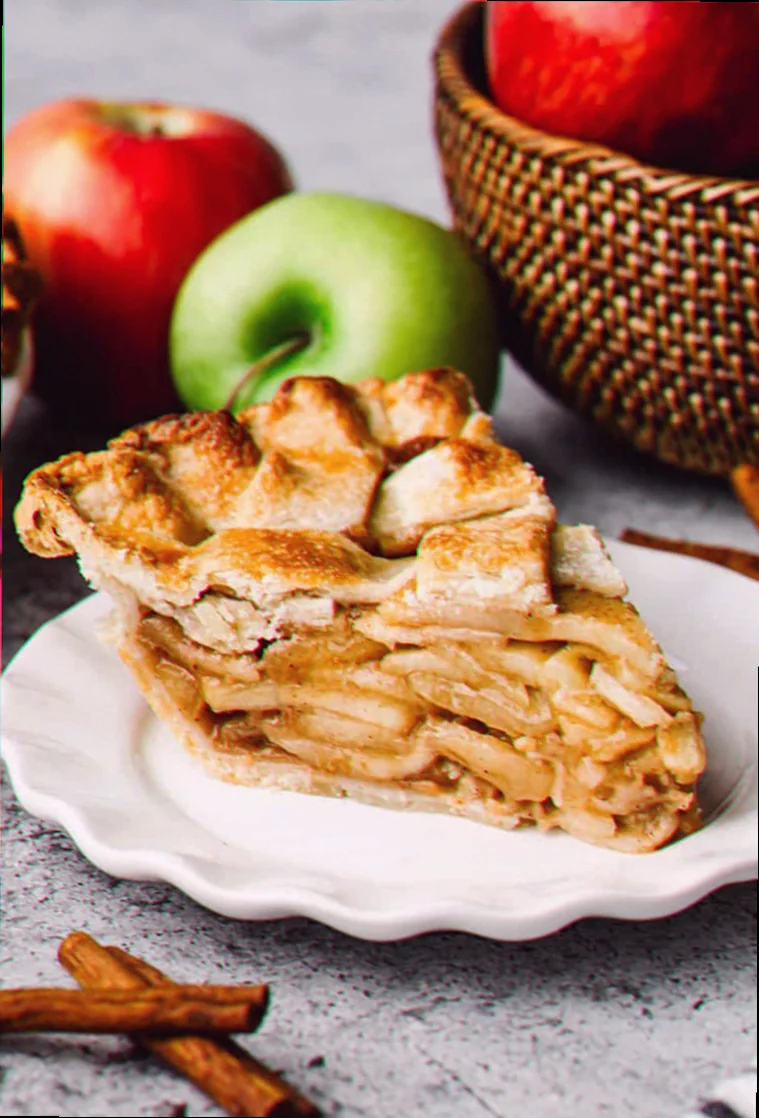
The year is 1381, and the kitchens of King Richard II are thick with the scent of woodsmoke and rendering fat. A master cook presses a stiff, greyish dough—composed of coarse flour and water—into a deep earthen mold, creating a “coffyn” designed not for consumption, but for preservation. Into this structural vessel, he layers tart, wilding apples, dried figs, and raisins, sealing the lid with a heavy hand to ensure no air reaches the fruit. This is the ancestor of the apple pie, a dish born not of a desire for dessert, but from the architectural necessity of food storage in a world before refrigeration.
Where the Apple Pie Comes From — and Why It Was Invented
The apple pie is a product of the temperate climates of Northern Europe, specifically the British Isles and the Low Countries, where the Malus domestica flourished in the damp, cool air. In the 14th and 15th centuries, the “pie” was a utilitarian tool. The crust, or “coffyn,” was a thick, inedible wall of paste that functioned as a primitive form of canning. By baking fruit or meat inside this airtight shell, the contents were shielded from bacteria and mold, allowing a harvest to last deep into the winter months.
The earliest recorded recipe for an apple pie appears in the Forme of Cury, a scroll of recipes compiled by the royal cooks of Richard II. In this medieval context, the dish was starkly different from the sugar-laden versions of today. Sugar was an exorbitant luxury, a medicinal spice imported from the Levant and accessible only to the highest echelons of the aristocracy. For the commoner and the king alike, the “sweetness” of an apple pie was derived from the concentrated fructose of dried fruits—raisins, figs, and pears—layered between the tart, tannic slices of orchard apples. The dish solved the problem of the “hungry gap,” providing a calorie-dense, storable food source during the months when the ground was frozen.
The Ingredients as Historical Artefacts
To understand the apple pie, one must trace the botanical and economic journeys of its components. Each ingredient is a map of human trade and conquest.
- The Apple (Malus domestica): Though we associate it with the English countryside or the American Midwest, the apple’s genetic home is the Tian Shan mountains of modern-day Kazakhstan. Carried along the Silk Road by traders, the fruit was hybridized and refined by the Romans, who brought grafting techniques to Western Europe. These early “cooking apples” were high in pectin and acid, designed to hold their shape under intense heat rather than to be eaten raw.
- The Spices (Cinnamon and Nutmeg): In the medieval and Renaissance periods, the presence of cinnamon and nutmeg in an apple pie signaled the reach of the Dutch and British East India Companies. These spices travelled from the Maluku Islands (the “Spice Islands”) across the Indian Ocean. Their inclusion was a display of geopolitical power; to eat a spiced pie was to consume the spoils of empire.
- The Fat (Lard and Butter): The crust’s evolution mirrors the history of animal husbandry. In the British tradition, lard (rendered pig fat) was the primary shortening, prized for its high melting point which created the structural “standing crust.” As the dish migrated and evolved, the introduction of butter reflected the rise of dairy farming in Northern Europe, shifting the texture from a hard casing to a flaky, edible pastry.
The Ritual of the Harvest — When and Why This Dish Is Made
Traditionally, the making of apple pies was tethered to the festival of Michaelmas on September 29th. This marked the end of the harvest and the transition into the dark half of the year. In rural England, the ritual of “wassailing” the orchards earlier in the year was meant to ensure a bountiful crop that would eventually be encased in pastry.
The pie was the centerpiece of the “Harvest Home” supper, a communal feast celebrating the successful gathering of grain and fruit. Sharing the pie was a social contract; it represented the communal effort of the village to secure its winter stores. In the domestic sphere, the “mother” of the house would typically be the keeper of the pie, managing the temperature of the communal bread oven—which, after the bread was removed, remained at the perfect receding heat to slowly bake the dense fruit pies overnight.
How Migration Changed the Apple Pie Forever
The most significant transformation of the apple pie occurred during the 17th-century English colonization of North America. The settlers brought apple seeds and pips, but they found a continent devoid of the honeybees required for pollination. It wasn’t until the mid-1600s, when European bees were imported, that the “American” apple orchard truly began to thrive.
As the dish moved across the Atlantic, it underwent a radical democratic shift. In England, the pie remained somewhat formal. In the American colonies, particularly in the “Cider Belt” of New England and the Mid-Atlantic, it became a daily staple. Because wheat was difficult to grow in the early colonial soil, the crusts became thinner to conserve flour, leading to the development of the “flaky” American style. Furthermore, the lack of refined sugar led to the use of boiled cider or maple syrup as sweeteners, creating a more robust, caramelized flavor profile.
The migration of the dish also saw the loss of the original “coffyn” technique. As wood became a plentiful fuel source and ovens became more common in individual homes, the need for long-term preservation within the crust diminished. The crust transitioned from a container to be discarded into a delicacy to be savored, marking the shift from “food as utility” to “food as pleasure.”
How to Make the Historical Transition Apple Pie
This recipe bridges the gap between the 18th-century English manor and the 19th-century American homestead. It eschews modern white sugar for the traditional depth of unrefined sweeteners and high-acid heritage apples.
| Ingredient | Quantity | Why it’s here |
|---|---|---|
| Heritage Apples (Cox, Bramley, or Granny Smith) | 1.2 kg | To provide the necessary malic acid and structural integrity. |
| Lard (chilled and leaf-grade) | 125 g | For the authentic “short” texture and historical structural bite. |
| Unsalted Butter (chilled) | 125 g | For the golden color and rich mouthfeel developed in the 18th century. |
| All-Purpose Flour | 500 g | To create the “shortcrust” that evolved from the medieval coffyn. |
| Dark Muscovado Sugar or Molasses | 100 g | To mimic the unrefined, earthy sweetness of colonial-era pies. |
| Ground Cinnamon and Mace | 5 g each | Mace provides the citrusy, floral heat common in Renaissance cooking. |
| Cold Water | 60–80 ml | To bind the dough without activating too much gluten. |
| Egg Yolk (for wash) | 1 unit | A 17th-century technique to seal the crust and provide a “glaze.” |
Method: Begin by constructing the pastry, a process that requires a cold environment to prevent the fats from melting prematurely. Sift the flour into a wide ceramic bowl and “rub in” the chilled lard and butter using only the fingertips. This action—the tactile breaking of fat into flour—is a centuries-old technique designed to coat the wheat proteins and prevent gluten formation, ensuring the crust remains tender rather than bread-like. Once the mixture resembles coarse sand, add the cold water incrementally, bringing the dough together into a firm disc. Wrap this in cloth and allow it to rest in a cool place for at least one hour; this relaxes the proteins, a step essential for preventing the crust from shrinking in the heat.
Prepare the apples by peeling and slicing them into thick wedges. In a large copper or heavy-bottomed pot, toss the fruit with the muscovado sugar and spices. Do not pre-cook them; the historical method relies on the “weeping” of the apple juices during the long bake to create a natural syrup. Roll out two-thirds of the dough to a thickness of 5 mm and line a deep pie dish. Fill the cavity with the spiced fruit, mounding it slightly in the center to account for the fruit’s collapse as it softens.
Roll out the remaining dough to form a lid. Moisten the edges of the base crust with water and press the lid firmly on top, crimping the edges with a thumb or a fork to create a “seal”—a vestigial remnant of the airtight medieval coffyn. Cut three small slits in the center to allow steam to escape, preventing the crust from becoming soggy. Brush the surface with the beaten egg yolk. Bake at 200°C for the first 15 minutes to set the pastry’s structure, then reduce the heat to 170°C and continue baking for 45 to 55 minutes. The pie is finished when the crust is the color of burnished oak and the juices bubbling through the vents are thick and viscous.
The Tension of the “American” Icon — Authenticity vs. Identity
The greatest tension in the history of the apple pie lies in the phrase “as American as apple pie.” This is a linguistic and cultural appropriation that ignores the dish’s deep European roots. The tension entity here is the sweetness profile. Modern commercial apple pies are often cloyingly sweet, using corn starch and high-fructose corn syrup to create a gelled consistency. Purists argue that this destroys the “authenticity” of the dish, which should rely on the natural acidity of the apple and the savory notes of the fat.
Furthermore, the debate over “Lard vs. Butter” remains a point of contention among culinary anthropologists. Lard is the historically accurate choice for the English tradition, providing a superior flake and a subtle savory undertone that balances the fruit. However, modern palates, influenced by the industrialization of the dairy industry, often find lard “unrefined,” leading to the dominance of the all-butter crust. The loss of lard in the common apple pie represents a loss of the dish’s pastoral, agricultural origins.
What the Apple Pie Has Become — and What That Tells Us
Today, the apple pie has been elevated to a symbol of domestic comfort and national identity, yet it has also been commodified into a frozen, uniform product found in supermarkets globally. This evolution tells a story of the “flattening” of food culture. Where once the apple pie varied by the specific variety of apple grown in a particular village’s orchard, it is now defined by the consistency of the Granny Smith or the Honeycrisp.
However, the recent resurgence of “heritage” baking and the interest in heirloom apple varieties suggest a desire to return to the dish’s roots. We are seeing a move away from the sugar-bomb pies of the mid-20th century back toward the complex, spiced, and structurally sound pies of the past. The apple pie remains a resilient vessel—not just for fruit, but for the history of human migration, the economics of the spice trade, and the enduring human need to preserve the sweetness of summer against the coming winter.
Related topics: Soft best apple pie filling recipe · Apple pie tfa recipe · Apple cinnamon pie recipe brown sugar
Questions About Apple Pie
What is the single ingredient you should never substitute in a traditional apple pie?
The High-Acid Cooking Apple (such as a Bramley or Cox’s Orange Pippin). Modern “dessert” apples like Gala or Red Delicious contain too much water and not enough pectin or malic acid. If you use a sweet eating apple, the fruit will disintegrate into a grainy mush and the flavor will be one-dimensional. The acidity is structurally necessary to balance the fats in the crust